YEA Lesson Library
Humility vs. Conceit
About This Lesson
This lesson focuses on the correct evaluation of a student’s own importance and abilities. Pharaoh’s conceit led to the destruction of Egypt’s economy and death for many of his people.
Scriptures
Exodus 10:1-29
Psalm 39:10-11
Psalm 62:7-9
Psalm 103:8-16
Isaiah 66:1-3
Jeremiah 4:5-9
Romans 12:1-5
Romans 12:3
Philippians 2:1-4
James 4:4-6
Words to Know
INTRANSIGENT - refusing to compromise or to abandon an extreme position or attitude.
IMMINENT - ready to take place
CONTRITE - grieving and penitent
SELF-ESTEEM - simply the way you esteem yourself; the trick is accurately appraising your abilities, then remaining humble before God
The Lesson
God sent Moses back to Pharaoh once again. He was up front with Moses, telling him that He would harden Pharaoh's heart, and the hearts of his officials. This is the first time we've been told that Egyptian officials were also as obstinate as Pharaoh. What was God’s purpose in doing even more miracles? He wanted to show His power. This would be a story that parents would tell their children and grandchildren, a story about what fools the Egyptians were and how God proved He was Jehovah.
Moses and Aaron trekked to the palace to see Pharaoh again. The message was, "How long will you refuse to humble yourself before the Lord?" Demands for Israel's release were laid down. They allowed enough time for Pharaoh to reflect on what had been happening to him and his nation, and to repent. Couldn't Pharaoh see that Egypt was just about finished? How long could this go on? Someone had to give in. But Pharaoh didn’t!
Pharaoh's refusal to let God's people go into the desert to worship would bring a plague of locusts so thick that no one could see the ground. Locusts would finish off every sprig of greenery that wasn't destroyed by the plague of hail. This would be the worst plague of locusts in Egyptian history.
Moses stalked out to talk with the court officials. They complained Moses was destroying them completely. Out of loyalty to their king and country, they blamed Moses. But surely they were beginning to become impatient with Pharaoh’s intransigence.
This was the first time that Moses and Aaron returned to the palace for more negotiations. This had to do with the imminent locust plague. Pharaoh agreed to let the Israelites go worship their God with the stipulation that they couldn't take their children with them. This was not acceptable to Moses. The children had to go. Then he and Aaron were driven out of Pharaoh's presence.
God told Moses to hold out his hands over the land of Egypt to bring locusts. Moses lifted his rod and God caused the east wind to blow. By morning, locusts covered the land from border to border - the worst locust plague in Egyptian history. They were so thick the land was dark. They ate every bit of vegetation. Not a tree or plant could be found in Egypt.
Guess what? Pharaoh did his usual about face and pled with Moses to ask God to get rid of the locusts. Moses honored Pharaoh’s request and God blew the locusts to the Red Sea. But God hardened Pharaoh's heart, and he did a one-eighty yet again.
Now Pharaoh was willing to let the Israelites go worship God and take their children, but not their flocks and herds. Moses refused because they needed animals to offer sacrifices. Not one hoof would be left behind. Again God hardened Pharaoh's heart and he wouldn't let the Israelites go.
Yet another disaster was lurking. God instructed Moses to stretch out his hands and a thick darkness covered all the land for three days.This came without Pharaoh receiving a warning. The Egyptians couldn't see each other and they couldn't go out. The sun was totally darkened. Not so in the land of Goshen where the Israelites lived. They had lights in their houses.
You know the story well by now, it's been repeated so many times. Pharaoh called Moses and agreed for the Israelites to leave. He quickly did a flip-flop and refused to let the Israelites go. He shouted at Moses to get out, that he didn't want to see him the rest of his life.
Now this is the kind of God Pharaoh was fighting. "He is merciful and tender toward those who don't deserve it; he is slow to get angry and full of kindness and love. He never bears a grudge, nor remains angry forever. He has not punished us as we deserve for all our sins, for his mercy toward those who fear and honor him is as great as the height of the heavens above the earth" (Psalm 103:8-9). In spite of God's mercy, His patience was running thin with Pharaoh. He had taken about as much as He was going to. Soon He would make it clear to Pharaoh, the Israelites, and the Egyptians that He is Jehovah God.
Have you ever pushed your parents, only to have their wrath suddenly descend on you? God is our Heavenly Father. He is God. He is the One who created us and our universe and He's given us everything we have. He has every right to expect us to do what He says without any foot-dragging. "Heaven is MY throne and the earth is my footstool. What Temple can you build for me as good as that? My hand has made both earth and skies, and they are mine. Yet I will look with pity on the man who has a humble and a contrite heart, who trembles at my word. But those who choose their own ways, delighting in their sins, are cursed. God will not accept their offerings. When such men sacrifice an ox on the altar of God, it is no more acceptable to him than human sacrifice" (Isaiah 66:1-3, TLB).
Humility is one of the greatest virtues. Oh, it may not be very cool with your peers. But God is not interested in you being cool. "God resists the proud, but gives grace to the humble" (James 4:6, paraphrase). But we're all just a little bit like God. We resist a proud person as well. Paul had this to say about humility, "Don't think more highly of yourself than you should" (Roman 12:3, paraphrase). In Philippians 2:3 he said, "Let nothing be done through strife or vainglory; but in lowliness of mind let each esteem other better than themselves." Always remember to humble yourself and submit to God's will before He has to deal with you as He did with Pharaoh. God's not looking for pride and conceit. He's looking for humility in you.
Student Prayer
Almighty God,
Thank You for being God and for revealing Yourself to me. Help me to have a proper estimate of myself and of You. Grant me Godly humility so that I will esteem others better than myself. And above all, help me to humbly bow before You as my King and my God.
In Jesus' name I pray.
Amen.
Daily Devotions
Sunday - James 4:4-6
Monday - Romans 12:1-5
Tuesday - Jeremiah 4:5-9
Wednesday - Philippians 2:1-4
Thursday - Psalm 103:8-16
Friday - Psalm 39:10-11
Saturday - Psalm 62:7-9
Objectives
At the end of this seminar, students will be able to:
1. Better appraise their own humility vs their conceit.
2. Explain the eighth and ninth plagues.
Topics & Themes
Conceit
Egypt
God’s Character
God’s Omnipotence
Humility
Pharaoh
Plagues
Materials Needed
Bible, YEA Students' and Presenter's books, attendance and memory verse charts, songbook, butchers' paper from last week, notebook computer, printer, paper, markers, pencils, prizes
How to Teach This Lesson
As students arrive, give every other student a piece of paper with the eight plague on it and every other one with the ninth plague on it. After opening the class with prayer, tell the students that we will almost finish our headlines this week. Explain those with the eighth plague should group in one corner and those with the ninth plague in another corner. Give them a few minutes to either write their headlines by hand or use the computer and do interesting fonts and colors. Bring students back to sit in chairs in a semicircle.
Ask: What's the story behind headline #8 - who are the people and events that were involved? What's the story behind headline #9 - who are the people and events that were involved? Vote on the best or most pithy headline and give that group a prize.
Debrief- How do you feel writing these headlines will help you to remember them and their order? Which headline is the hardest for you to take? Why?
Pharaoh - On a scale of one to ten, with ten being the highest, how would you rate Pharaoh's conceit? How much good did Pharaoh's conceit do him in saving his nation from destruction? What would have been a better course of action for Pharaoh?
Now send the class back to their original groups and have them write a short newspaper story that shows how different things would have been for Pharaoh and the nation of Egypt had he humbly submitted to God. Remember, God never said that Pharaoh had no choice. He did say He hardened his heart. Bring the class back together after they have their stories written and have each group read their story.
Background - Ask a student facilitator to read the second through sixth paragraphs under Background to your class. Discuss the virtues of humility. Ask a student to read Isaiah 66:1-3. Ask another student to read James 4:6. Ask yet another student to read Philippians 2:3. Ask: Do you understand the importance of correctly evaluating your abilities and importance? How important is humility in your relationship with God? What have you learned from Pharaoh’s example that will change your mindset?
Teacher-Directed Activity
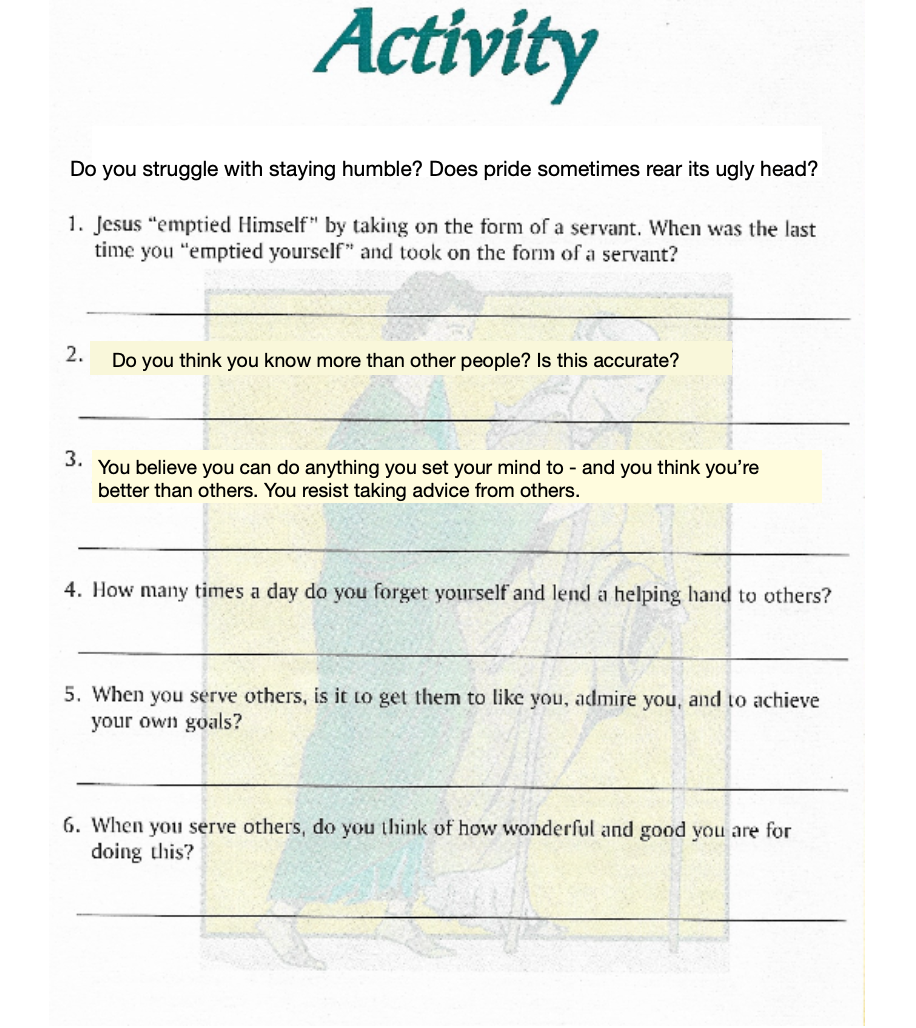
Ask a different facilitator to go over the Activity in the students' book with the class.
Song
"Humble Thyself in the Sight of the Lord" is on page 38 of The Group Songbook.
Closing Prayer
Have the students form a circle and join hands. Ask each student to give one lesson they have learned from the nine plagues we have studied so far. Start with yourself. Ask for a student facilitator to lead in prayer thanking God that He is God, that He made us, and asking Him to help us to always keep that in perspective.
Printable Pages