YEA Lesson Library
A Hungry Crowd
About This Lesson
This lesson teaches about Jesus feeding the 5000 with five loaves and two fish. It encourages the student to ask God for what he needs.
Scriptures
Exodus 25:2
Matt 14:13-21
Matthew 16:9
Mark 6:30-44
Luke 9:10-17
John 6:1-14
2 Corin. 9:7
Words to Know
CROWD - a large group of people
BARLEY LOAVES - small, flat loaves of bread made from barley
MIRACLE - something God does that man cannot do
The Lesson
Jesus was the greatest teacher who ever lived. He taught in the homes of His friends. He taught in the Temple. Sometimes Jesus taught on the hillside or by the seashore. He even found some of His helpers by the seashore. Jesus told the fishermen to stop fishing for fish and start “fishing” for men. Jesus, God’s Son, four strong fisher- men, plus the other disciples went around teaching about God.
Jesus’ disciples worked very hard for many hours each day. He knew they needed a rest. Jesus also wanted to spend time with them. So they went across the Sea of Galilee with Jesus to rest. But many people saw where Jesus was going. They wanted to hear Him teach some more. But, most of the people didn’t have a boat. So they walked all the way around the lake to see Jesus. That was a really long way. But it was very important to them to hear Jesus.
At the end of the day the people were tired and hungry. Some were sick. They had walked such a long way. “Look at all these people,” the disciples said. They wanted to send them home before dark. They had nothing to eat and no place to sleep. But Jesus felt sorry for the people. He started healing those who were sick.
“I want you to feed all these people,” Jesus said to His disciples. Where would they get enough food to feed so many people? There were no stores nearby. And it would take a lot of money to buy enough food to feed such a huge crowd. There were more people than we ever see at the Feast of Tabernacles.
Jesus sent the disciples to see if anyone had food. One little boy had a small lunch. He only had five little barley loaves of bread and two small fish. But the little boy said, “You can give my lunch to Jesus.”
Do you think one little boy’s lunch could feed so many people? The disciples didn’t think so. But they were about to see a miracle!
Jesus said, “Everyone sit down on the grass.” Then He took the five loaves of bread and two fish. He thanked God for the food. He broke the bread in pieces. Jesus gave some bread and fish to each disciple, and they gave it to all the people. Everyone ate until they were full. What a wonderful miracle! But that wasn’t all. The disciples filled up 12 baskets with food that was left over. They didn’t leave a mess. Now this was a really big miracle!
Where did the five loaves and two fish come from? A little boy shared what he had. He was not selfish. Would you be willing to share like that? Jesus took the food and blessed it. He turned what the little boy shared into something really big. Don’t you think that little boy felt really good about sharing?
Remember, God always knows and cares about what you need. If you need food, you can ask Him. He will give you what you need. You ask Him by praying. Always remember to thank God for your food. Before you eat breakfast, lunch, or dinner you should give thanks. God is the one who gives us our food.
Student Prayer
Thank you Father for this kind little boy who shared his lunch with the crowd of hungry people. Help me to be like this little boy and share. Thank you for the food you give us each day. In Jesus’ name. Amen.
Daily Devotions
Sunday - Matthew 14:13-21
Monday - Mark 6:34-39
Tuesday - Luke 9:11-17
Wednesday - John 6:5-14
Thursday - Matthew 16:9
Friday - Exodus 25:2
Saturday - Mark 6:40-44
YEAH — At-Home Activity
1. Dividing the Work. Dividing 5000 by 12 gives you about 417 people for each disciple. If you have a group that could handle counting this much, have each student count out 417 pennies, buttons, beans, or toothpicks. Otherwise, have them counted out for them ahead of time. Even 417 would be a large number to feed, especially with one boy’s lunch! Manipulating the objects reinforces the magnitude of this miracle. If the students haven’t read the lesson, read it to them. Otherwise review the lesson with the review questions in the teacher’s edition.
2. Waste Not. Set out one small basket with 5 loaves and two fish. (Since you probably don’t want two real fish, make your fish out of two sheets of paper. Cut out the fish outline, staple the sheets together, and stuff with newspaper.) Ask the students how many people this could feed. Have them help you re-tell the story of Jesus feeding the 5000. Then pull out twelve baskets. Emphasize that Jesus said to collect all the leftovers and not to let anything be wasted. Discuss how we need to practice that principle in our lives. We are stewards of what God has given us. That means we need to take care of what we’ve been given. Ask the students to give you examples of good stewardship. Bring the discussion around the potlucks at church or meals in general. Ask the students to suggest a good steward action plan, such as taking less and going back for more if they are still hungry.
3. Miracles. Have the students help you retell the story of Jesus feeding the 5000. The feeding of the 5000 is such a significant miracle that it’s recorded in all four gospels. Talk with the students about what miracles are and have them share examples of God answering prayer, rescuing someone, healing someone. Be prepared to share some of your own stories about times when you believe in faith it was God who did something for you. Encourage the students to write down instances when they believe God worked in their lives. Keeping a journal of these times God’s provision is such an encouragement to read through when things are stressful or hard.
4. Faith and Thankfulness. If the students haven’t read the lesson, read it together or tell the story of Jesus feeding the 5000. If they have read it, review the main points. Discuss with the students that God wants us to ask Him for what we need. His answer is not always immediately yes. Sometimes it’s no (in this life), and sometimes He wants us to wait on Him for a while. Regardless, we ask in faith, knowing that God wants the very best for us. Children have huge capacity for trusting God. Encourage their faith, not by telling them that God will always answer as they want Him to, but by reassuring them that God is faithful and loves us very much. Regardless of God’s answer, our response is to give thanks in all circumstances. Draw a bouquet of flowers on a large piece of sketch paper (11 x 17). Make the petals large enough that the students can write what they are thankful to God for. Add color with their favorite tools.
5. Hungry. If the students haven’t read the lesson, read it together or tell the story of Jesus feeding the 5000. If they have read it, review the main points. Ask the students what they want to eat most when they’re really hungry - perhaps like at the end of the Day of Atonement if they’ve been fasting. Write down their answers on a dry erase board or large flip chart/poster page. Encourage them to share their favorite food or meal ideas. Then remind them that when you are hungry, everything tastes wonderful! (Clean foods, of course!) What a blessing from God that He gives us good things to eat, He gives us taste buds so we can taste different flavors, and He gives us a variety. We are so blessed. Have fish patterns ready to cut out. On each fish, write a favorite food or a blessing from God. Let the students color them. Then punch a hole in the fishes’ noses and run a string through them. Send them home with their own string of fish and reminder to be thankful to God.
Objectives
At the end of this lesson, students will be able to:
1. Explain that feeding the crowd was a miracle.
2. Discuss the importance of sharing what we have with others.
3. Explain that we should give thanks to God for our food.
4. Recite their memory verse.
Topics & Themes
Bread/Loaves
Disciples
Fish
Giving Thanks to God
God’s Provision
Helping Others
Jesus, His Ministry
Jesus, His Miracles
Feeding of 5000
Prayer
Sacrifice and Offerings
to God
Stewardship
Materials Needed
Bible, YEA student’s and teacher’s books, attendance and memory verse charts, stars, music player and music CD/cassette, songbook, a loaf of French bread, peanut butter, jam, two small baskets, doily or colorful napkins, construction paper, marker, crayons, gift wrapping ribbon, posters or decorations
Preparation
Children are affected by their environment. Light, posters, color and seating arrangements can contribute to the impact of the lesson. Just a little effort can make a big difference sometimes.
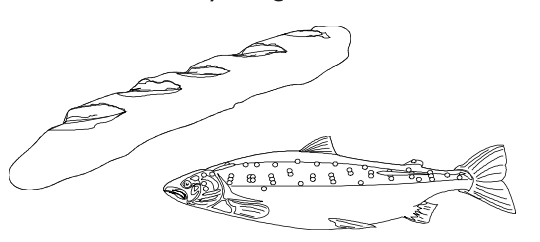
Before class, enlarge and photocopy six sets (5 loaves and 2 fish each) of the “lunch” pattern onto construction paper and cut them out. You will also need ten fish for the review part of the lesson.
At home, cut a loaf of French bread in half lengthwise. Spread it with peanut butter and jam. Then cut across the loaf several times so that each child can have a piece. Cut enough fish out of colored construction paper for each piece of bread. Write a review question on each fish and punch a hole in it. Use gift wrapping ribbon to tie around each piece of bread leaving enough to go through the hole in the fish – tie it to the piece of bread. Line a basket with a paper doily or colorful paper napkin (this will make it more special) and place the bread into it.
How to Teach This Lesson
First, have the children recite the names of the 12 disciples that they memorized this week.
When preparing a lesson, it’s always good to remember the historical context. Herod ruled over Galilee and had recently ordered John the Baptist killed. He was beginning to look upon Jesus with suspicion. When King Herod heard about Jesus, he said to his men, “This must be John the Baptist, come back to life again. That is why he can do these miracles” (Matthew 14:1-3 TLB).
Children this age may have difficulty grasping how large a crowd of 5000 people is. However, The Expositor’s Bible Commentary says this crowd might have been 15 to 20 thousand – there were 5000 men alone. The Feast of Tabernacles may be the largest crowd of people the children have personally experienced. Yet that is much, much smaller than the multitude Jesus fed that day.
This lesson offers an opportunity to weave spiritual and character applications as the story is told. Jesus’ disciples were worried about how to feed the multitude with physical food while Jesus was giving them “living bread.” They were concerned that they would not be able to find enough food to feed so many. Jesus demonstrated His power by creating enough food to feed the multitude and have twelve baskets left over from five loaves and two small fish. The disciples focused on how much it would cost to feed so many, while the little lad stepped out in faith and showed kindness when he shared his food. Jesus accepted the little lad’s lunch, offering thanks both to him and to the Father for providing their daily bread. Emphasize the importance of realizing who gives us our food, and thanking God for it.
Review Questions
After the lesson is taught, pass around the basket of bread and let each child take a peanut butter sandwich. Then have each child ask the question on the fish that is tied to his or her sandwich. Ask them not to eat the sandwich until after the review questions are all asked and someone has thanked God for the food.
1. Who gave Andrew the loaves and fish?
2. How many loaves of bread and how many fish did he give Andrew?
3. How many people did the bread and fish feed? (Remind them that there were 5000 men plus women and children.)
4. How could only five loaves of bread and two fish feed so many people? (Jesus had to perform a miracle.)
5. What did you learn from what the little boy did? (He shared.)
6. What should you do before you eat breakfast, lunch or dinner?
Teacher-Directed Activity
Divide your class into two groups and line them up single file at one end of the room, with an adult leader for each group. At the opposite end of the room, place two small baskets on the floor. Place one set of bread and fish in each basket (giving the remaining two sets to each adult leader). At your signal, the first child in each line is to run to the team’s basket and pick up one item, bringing it to their leader. He tags the next player, then goes to the end of the line. The next player goes to the basket, until all of the food from the basket is gone. When the basket is empty, the next child goes to the leader and takes an item and returns it to the basket, tagging the next child, etc., until all the food from the leader’s hand is in the basket. The first team to fill their basket is the winner. At the end of the game, the basket will contain more food than at the beginning.
REACH Activity
Special materials: Video recorder, blank video tape
1. Draw: Divide a piece of drawing paper in half. On one side, draw a picture of the huge crowd which had come to hear Jesus teach and to be healed. On the other side, draw the 12 baskets of food that were leftover after everyone had eaten.
2. Read John 6:1-14. Write a play for the YEA lesson. Have your family help you perform the play. Video tape it to watch afterwards.
3. Not only does God give us what we need to eat, He provides so much for us. Write five things in your Bible notebook that you want to remember to thank God for today.
4. Imagine going to a Major League baseball game. What if it was your job to feed all of the people in the stadium? What would you feed them? How long would it take to feed all of them? How would you make sure everyone got something to eat? Make a plan in your Bible notebook. Then think about the incredible miracle Jesus did with the little boy’s five small barley loaves and two fish.
5. Sing: “Jesus in the Morning”on page 89 of the Kids Classics Collection. When you sing the fifth verse, think about how much you have to thank Jesus for.
6. Make a thank you note for God out of construction paper. Hang it on the refrigerator or set it on your dresser to remind you to thank God every time you pray.
7. Do a sword drill with the Daily Devotional Scriptures. (See Notes section for directions.)
8. Sing: “Come, Ye Thankful People, Come”on page 139 of the CEM Hymnal. Make a list in your Bible notebook of the things in the song for which people are thankful.
9. Write a song about the YEA lesson to the tune of “Three Blind Mice.”Include the words “Greatest Teacher” and “Jesus.”
10. Find the word “compassion” in the dictionary. How does the meaning apply to the YEA lesson? Who showed the people compassion? Follow Jesus’ example and show compassion to others.
11. Barley is a grain. Use a Bible encyclopedia to find out where it grows and how it is used. There is a harvest of barley that takes place during a special time of the year. See if you can find out more information about barley harvest in your Bible.
12. How do you think the little boy felt when Jesus fed all of those people with his five loaves of bread and two fish? Write a paragraph telling the little boy’s side of the story.
13. Draw two columns on a sheet of paper. Label one column “Share” and the other one “Selfish.” It may be hard to admit, but there are times when you only think of yourself. When you forget to think of others, write it on your list. Then pray and ask God to help you do better next time. When you find yourself sharing with others write it down and put a star next to it. Then praise God for helping you learn from Jesus about helping others.
14. Look back on the days of creation. Can you find a pattern in the order of God’s creation? (Hint: There was water before plants.) Make a drawing that shows how each day of creation is important to the next day.
15. Offer to say a blessing at the next meal. Write it first if that will help.
16. Fold a piece of construction paper in half. Place one hand against the fold. Use a marker to trace the hand. Cut out the hand. Now you should have folded hands. Open the hands. Draw a smiley face across the hands. Then write the memory verse on the inside of the hands. Practice the memory verse!
17. Sing: “He’s Got the Whole World in His Hands” on page 54 of the Kids Classics Collection.
Song
“If You’re Happy” is on page 47 of Kids Classics Collection.
Closing Prayer
This might be the time when the teacher or parent would want to ask the blessing on the food. However, you might ask for a volunteer.
Printable Pages