YEA Lesson Library
Sold!
About This Lesson
This lesson continues Joseph’s story, explaining how he was sold into slavery in Egypt by his brothers. It encourages the student to trust God even when trouble comes.
Scriptures
Genesis 37:12-36
Joshua 1:7-9
2 Chronicles 16:9
Job 1:18-22
Job 2:10
Job 13:15
Psalm 23:4
Psalm 32:6-8
Hebrews 13:3, 5-6
James 1:13-17
Words to Know
CISTERN - a deep, covered pit in the ground for storing water
CARAVAN - a long line of camels which transport goods from one place to another
The Lesson
Robbie stormed out the back door, very angry at his brothers and sisters. Why couldn't they just leave his things alone? Why did he have to share? Why did Mom and Dad always take their side? Sometimes he wished he was an only child. Robbie's anger took him past the back fence and to the creek that ran between their property and the Benders' property. He plopped down along the edge of the creek, quickly scanning for frogs. Yep, it would be nice to be an only child, he repeated in his head. But as suddenly as the thought came again, he thought about his best friend, Alex. Alex's little sister had just died in a car accident. Suddenly his anger was gone. Instead he bowed his head to quickly thank God that his brothers, sisters, and parents were all okay. But, he grumbled, “I still wish they'd leave my stuff alone. Maybe he'd better pray about that attitude too," he scolded himself.
Joseph, the man in the Bible that we learned about last week, did not have a very good relationship with his brothers. His father had given him a special coat that made his brothers jealous. Joseph had gotten his brothers into trouble by telling on them. Then, problems between them became worse when he told them about the dreams he had about ruling over his brothers.
One day Joseph's brother's took their flock of sheep to graze in Shechem. Jacob began to wonder how his sons were doing. So he asked Joseph to go see how they were and report back to him. Joseph did as his father asked him to do and headed out to Shechem. As he searched the field to find his brothers and their flocks, a man asked who he was looking for. "For my brothers and their flocks,” Joseph replied. This man told him that they had gone to Dothan. So Joseph headed out to Dothan and found them.
Joseph's brothers were still angry about his dreams. When they saw him coming they said, "Here comes that master-dreamer. Come on, let's kill him and toss him into a well and tell father that a wild animal has eaten him. Then we'll see what will become of his dreams!" (Genesis 37:19-20 TLB).
Reuben was one of Joseph's brothers. He didn't like what his brothers were planning. He wanted to spare Joseph's life. Rather than killing Joseph, Reuben suggested that they throw him alive into a cistern. "That way, he would die without anyone actually killing him," Reuben told them. But Reuben's real motive was to convince his brothers to do this so he could come back later, get Joseph out of the cistern, and return him to his father.
When Joseph showed up on the scene, his brothers pulled off his coat of many colors and threw him into the empty cistern. Now that this was taken care of, they sat down to eat supper. Suddenly they heard a noise getting closer and louder. What could it be? They looked up and saw a whole string of camels with Ishmaelite traders riding on them. These traders were taking spices, gum, and herbs from Gilead to Egypt.
Judah began to think about what was happening. He saw the traders coming as a way to make some money off of Joseph. "Let's don’t kill Joseph; let's sell him to these traders," Judah said. Selling Joseph to the traders sounded like a good idea to his brothers. Not only could they make some money, best of all, they would be completely rid of Joseph. So they agreed to sell him to the traders for 20 pieces of silver. And Joseph left with the traders.
After Joseph was gone with the traders, his brothers had another problem. What would they tell their father about Joseph disappearing? The brothers knew they would have to come up with a story Jacob would believe. So they made up a story that would lead Jacob to think a wild animal had eaten Joseph. They killed a goat, put spots of blood all over Joseph's coat, and took the coat to their father. The brothers told Jacob they had found the coat. They asked if Jacob knew who it belonged to. Jacob immediately knew it was Joseph's coat. He thought that Joseph had been killed and eaten by a wild animal. Jacob tore his clothes and refused to be comforted by his family - he wept for Joseph. He cried and mourned his son for many weeks. Jacob said, "No, in mourning will I go down to the grave to my son." But Joseph was still alive.
Meanwhile in Egypt, Joseph was sold yet one more time. The traders sold Joseph to Potiphar, who was Pharaoh's captain of the guard. After all that Joseph had gone through, it would have been easy for Joseph to think that he had lost everything. He'd lost his family. He'd lost his freedom. He had lost his coat of many colors. But had he really lost everything? He had his life and he still had the most important thing anyone can have. He had his relationship with God. And God was working things out for him.
There may be times when things get really bad for you. You may feel hopeless. But remember the story of Joseph. He kept his relationship with God. In the next lessons, you'll see how God took care of Joseph. How do you have a relationship with God? Every day you read your devotional Bible readings on the back of your book and you pray. You obey God and do what the Bible says. Always remember God loves you and is as close as a prayer. No matter how bad things might get, God is always there ready to work things out for you. You can count on it!
Student Prayer
Dear Heavenly Father,
Please watch over me and guide me in your ways. Help me to
always know that you are there to help me.
In Jesus' name.
Amen.
Daily Devotions
Sunday: Genesis 37:23-27
Monday: Job 1:18-22
Tuesday: James 1:12-17
Wednesday: Joshua 1:7-9
Thursday: Hebrews 13:3, 5-6
Friday: Psalm 32:6-8
Saturday: 2 Chronicles 16:9
Objectives
At the end of this lesson, students will be able to:
1. Continue the story of Joseph from his dreams through his sale to Potiphar.
2. Relate the promise that God is in control and loves His children, regardless of circumstances.
3. Add biblical examples of trusting God to their list of encouraging scriptures.
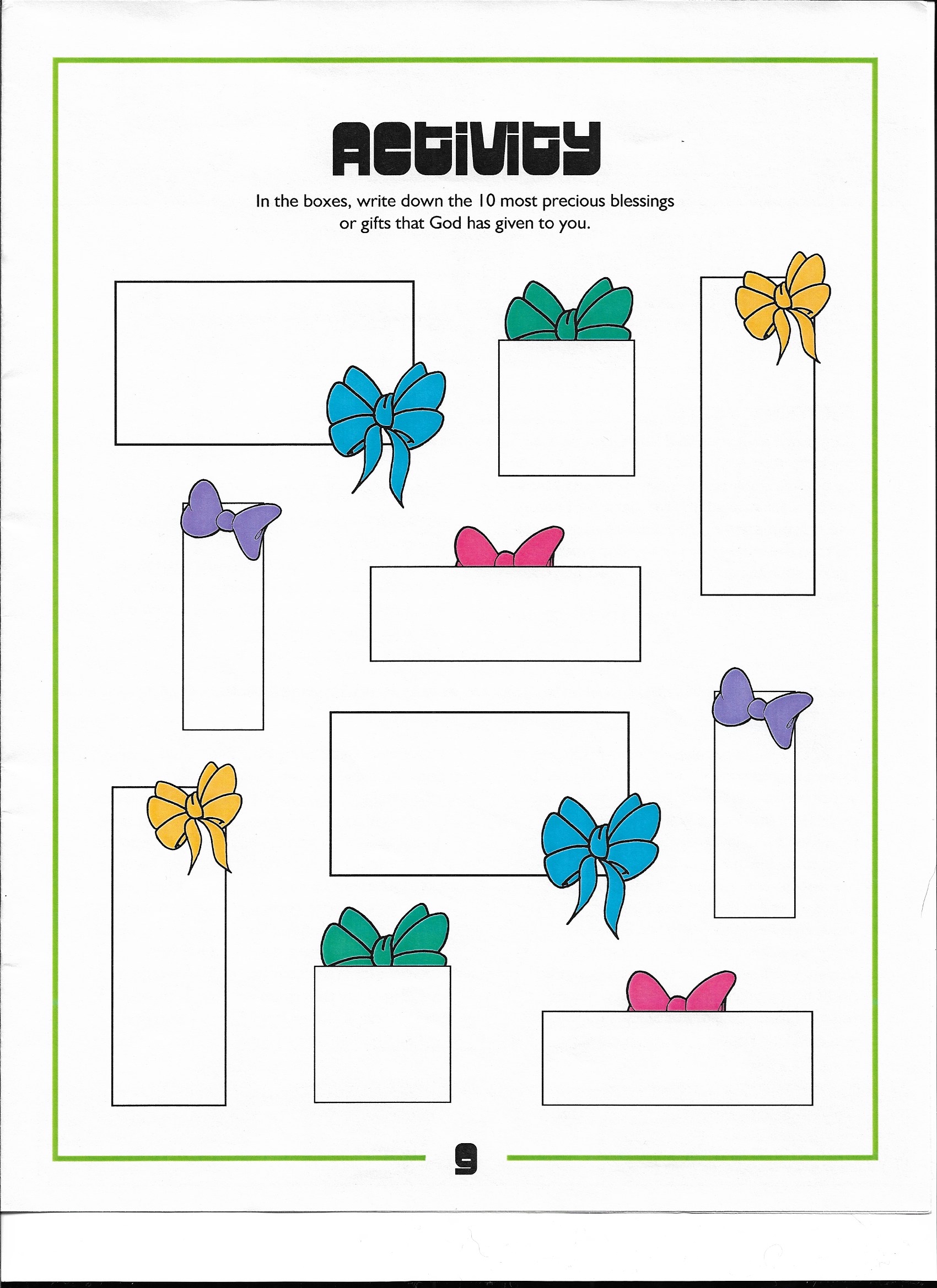
4. Enumerate the blessings in their individual lives.
Topics & Themes
Anger
Attitude
Envy/Jealousy
Family
Joseph
Joseph’s Brothers
Joseph’s coat
Lying
Potiphar
Relationship With God
Sin
Slavery
Trusting God
Materials Needed
Bibles, YEA students' and teacher's books, pencils and pens, attendance and memory verse chart, stars, songbook, CD or cassette tape, music player, blackboard, ten boxes for each student, markers
Preparation
Since 9/11/01 unrest in the world has multiplied. Chemical, biological, and nuclear war are more likely than ever. Parents and teachers must begin now building faith in God's children. God is trustworthy; He is to be trusted (Job 13:15). W e don't know why things happen as they do, but we know that al things work to the good for those who love God and who are called according to His purpose! (Romans 8:28). Teach children these principles early so that they will hold onto them throughout their lives and cling to God when calamity strikes, as ti will. Their childlike faith in our Heavenly Father is awesome in its power. We must build the foundation of scriptures for that faith to rest upon, so that they will rely on Him to strengthen them always. As you help to lay the foundation, their faith will more than likely strengthen yours (as parent and/or teacher) to face the trials in your own life.
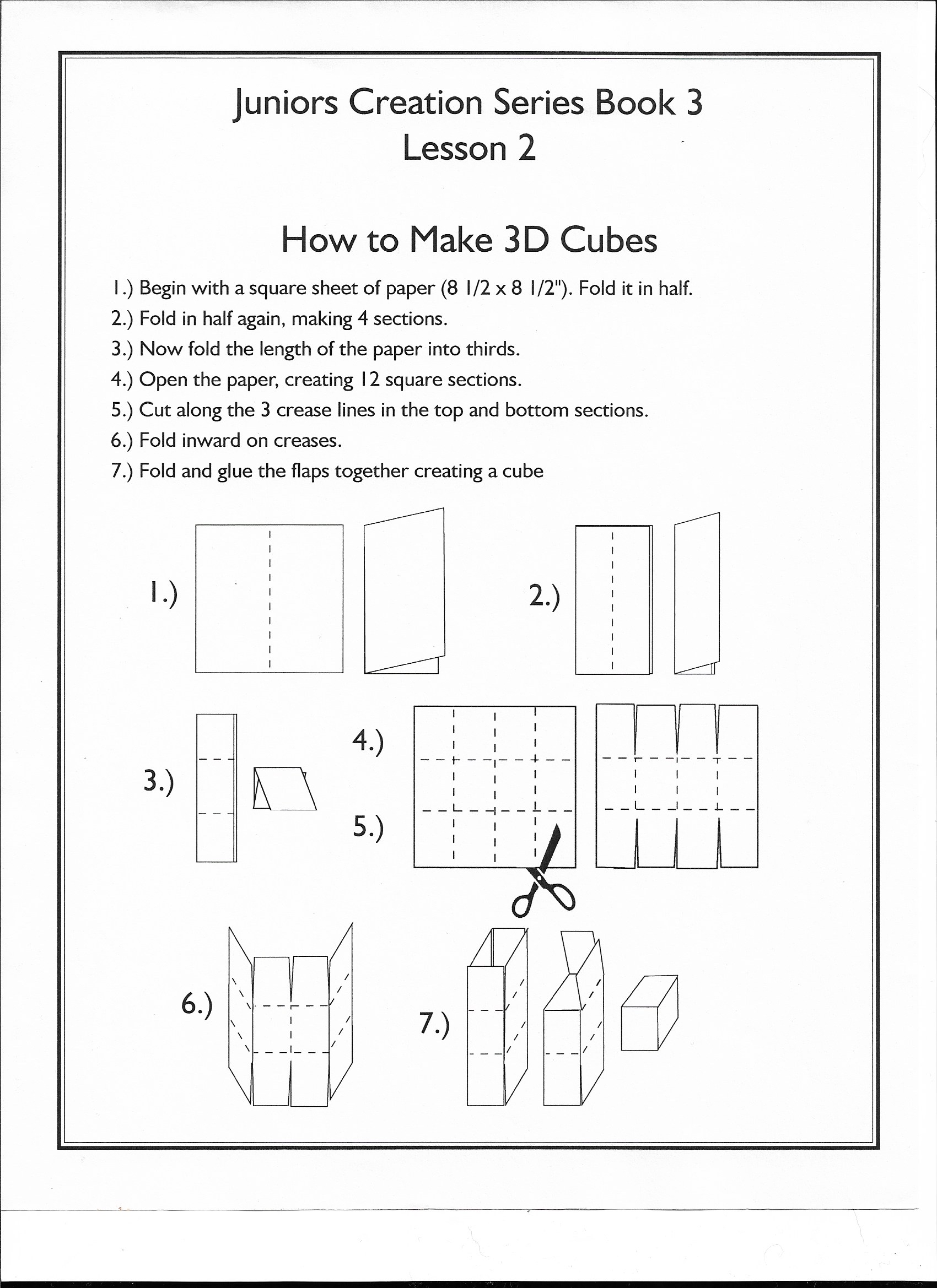
Make ten 3-D boxes (cubes) for each student prior to class (see Pattern Page for directions on making your own boxes). These can be folded out of a square sheet of paper, can be pasted together, or can be small preformed boxes. Then take ten additional boxes and write Joseph's ten blessings on them (not necessarily in order of importance). A suggested list: I) Jacob, 2) brothers, 3) coat of many colors, 4) home, 5) personal belongings, 6) relationship with God, 7) health, 8) faith and trust in God, 9) his very life, 10) his values and integrity.
How to Teach This Lesson
Boxes of Blessings - As students arrive, have them take their list of blessings from the activity in their lesson and write one blessing on each box with a marker. Each child should have ten blessings. If they were unable to think of that many, help them!
Building Blocks - Have the children set their blessings before them in a pyramid. Set Joseph 's blessing blocks in front of you. Make sure the blocks are so closely in front of each child as to almost be in their way. Then ignore the blocks like they aren't apart of the lesson- even if they fall down or the students move them out of the way.
Joseph’s blessings - Remind the students of last week's lesson: Joseph's dreams and his relationship with his brothers. Continue the story with them, telling them about having to search to find the brothers with the flocks because they weren't where he expected them to be.
The plot - Explore the students' feelings of the hatred that Joseph's brothers had for him. Ask: How could you come to hate your brother so much that you would want to kill him? Had Joseph done anything that really deserved that kind of hatred? Which two brothers worked to save Joseph from murder. (Reuben and Judah.) Talk about how a group of people can come up with some pretty evil ideas, and everyone goes along. The peer pressure, or mob syndrome, can make you do things that you wouldn't do on your own. Remind them to strongly resist getting into a situation that can escalate out of control.
Sold - Murder is final - But slavery, although not desirable, at least kept Joseph alive. Ecclesiastes 9:4 says a "live dog is better off than a dead lion." While there is life, there is hope.
Job and David connections - Job lost his family, all of his possessions, and his health. Yet, he trusted God. Ask the students to find the scriptures in their lesson and read them aloud. Then use this opportunity to have each student recite the memory verse. Tell them that Psalm 23 was written by David. He turned to God and trusted Him when he was depressed and in danger.
Building blocks - Revisit the blessing blocks. Ask the students to put their hands in their laps and look to see where their blessing blocks are. Some of them may have been toppled. Some may have been pushed out of the way. Ask the students to look at which blessings were written on the blocks that got in their way. Have them think what it would be like not to have that blessing anymore. It certainly wouldn't be in the way! Then look at Joseph's blessing blocks.Take the ones out that he lost when he was sold to the traders. Remind the students that they still have all of their blessings right now. They need to remember to thank God for the blessings that He has given. It is too easy to take them for granted - until they are gone and you can't get them back.
Building blocks that last- Look at the building blocks that Joseph had left. Selling him into slavery couldn't take away his trust and faith in God, his values and integrity, or his relationship with God. Remind the students that if in the future any of those blessings in front of them are taken away, God is still there and He cares for each of them. Remind them of 1 Corinthians 10:13: "No temptation has seized you except what is common to man. And God is faithful; he will not let you be tempted beyond what you can bear. But when you are tempted, he will also provide a way out so that you can stand up under it." Suggest this might be another good scripture to add to their Ten Week Challenge.
Take your blessings home - Let the students take their blocks with them. Some of them may throw them away later: others may actually take them home and set them up in their room. Regardless, their actions will stay with them and have an impact at some point.
Review Questions
1. What happened to Joseph when Jacob asked him to go look for his brothers?
2. Which brothers wanted to save Joseph?
3. What did the brothers end up doing with Joseph?
4. What did the brothers do with the coat of many colors?
5. Who did the caravan traders sell Joseph to in Egypt?
Teacher-Directed Activity
The activity has been incorporation into the lesson.
REACH Activity
Back to the Bible: All Things
We don’t see the end of the story from where we currently are. We don’t know how God is directing our paths. We don’t see how our lives intertwine with others. We just have to believe that, if we have committed our lives to following God and trusting Him, He will direct our lives for our good. Read these three Bible verses: Proverbs 3:5-6; Romans 8:28; and 2 Corinthians 4:17. Do you have a favorite Bible verse that encourages you to trust God, no matter what? Write it down in your Bible notebook.
Start a separate section in your Bible notebook to write favorite verses, verses of encouragement, or verses which speak of God’s promises. These are the ones you will turn to when life gets hard.
Journal Jot: Betrayed
What a shock it must have been to Joseph to not only realize that his brothers hated him enough to sell him into slavery, but also to actually slowly be taken away from his family by the camel caravan! Family is supposed to be your support and your strongest cheerleaders.
In your Bible notebook either write about 1) the amazing family that you have and how much you appreciate each member, or 2) how much you can relate to what Joseph experienced. Then write a thank you note to God. Tell God that you know that He sees where you are and He wants the very best for you.
Word Study: tsalmâveth
The compound Hebrew word for “shadow of death” is tsalmâveth. It means “shade of death, the shadow of death, the grave, deep darkness, terror, calamity.” One of the few compound words in Hebrew, the final consonant of the first part forms a contraction with the first consonant of the second part. “It is a poetic term for very thick darkness” and is most well-known in Psalm 23:4 where “it means that God will lead His people safely through no matter how dark a place is” (Source: Zodhiates’ Hebrew-Greek Key Word NAS Study Bible, 1990).
Just Toolin’ Around: Map It
Find Dothan (where Joseph’s brothers were pasturing the flocks) on a map. Then find Egypt. How far apart are these two locations? Find a map and copy it to put into your Bible notebook. Note the location of Dothan and Egypt. Then find Hebron (where Joseph started) and Shechem (where Jacob had sent Joseph to find his brothers).
Did you Know? Caravans
During the time of Joseph, Dothan would have been situated on a road called Via Maris (Way of the Sea), an ancient trade route which connected Egypt in the south with Phoenicia, Damascus and eventually Mesopotamia. As its name suggests, it hugged the coast of the Mediterranean Sea. People would often travel in groups for protection from thieves and wild animals. Additionally, since roads were not paved, a route that was well-traveled would minimize the risk of hazards, like quicksand, cliffs, impassable gullies or rock formations, and forests. (Sources: NIV Archaeological Study Bible, 1984, p. 63 and The Victor Journey Through the Bible, V. Gilbert Beers, 1996, p. 42-43.)
Stretch It Out: Color Reveal
Using crayons, fill an entire page with heavy crayon. This works best if there are no white places left and if the crayon is applied very heavily. Once you have filled the entire page with a crayon design, cover it all with very heavy black crayon. Then, using the pointed end of scissors, scratch out your memory verse (or a portion of Psalm 23:4). Just like God is with you in the Valley of the Shadow of Death and will send the Light (Jesus) to you, the beautiful crayon design is revealed as you scratch off the black crayon. (Note: this is exhausting work! It will take time to create a beautiful masterpiece. Take your time and do it well. It’s worth the effort.)
Music Notes: Be Still, My Soul
This hymn is on page 70 of the CEM Hymnal.
The original text was written during a revival in Germany in the 1700s. Nearly a century later, it was translated into English and set to a movement from Finlandia, written by Finland’s best-known composer, Jean Sibelius. (Source: Amazing Grace, Kenneth Osbeck, 1990, pg. 28)
As you read through the words, write down the lines in your Bible notebook which you find the most encouraging. Do you think Joseph would have found these words encouraging when he found himself sold into slavery?
Questions?
Write down any questions you have in your Bible notebook so that you can remember to ask your parents or your pastor.
Song
"Kum Ba Yah" (Come By Here) is on page 84 of Kids Classics Collection.
Closing Prayer
Direct the students to seek God al the time, including when events in their lives are distressing. Encourage them to thank God that He is there always and His love is everlasting.
Printable Pages