YEA Lesson Library
Son of Promise
About This Lesson
This lesson gives the concrete example of the fulfillment of God’s promises when He gave Isaac to Abraham and Sarah. It encourages the student to believe in, trust, and obey God.
Scriptures
Genesis 18:1-15
Genesis 21:1-8
Romans 4:16-22
Romans 4:21
2 Timothy 1:12
Hebrews 6:13-15
Hebrews 11:11-12
2 Peter 3:8-9
Words to Know
ABSOLUTELY - positive, no doubt
FULFILL - to carry out, to bring to pass
INHERITANCE - to receive property or money at the death of someone else
The Lesson
There is a saying that states, "A promise is only as good as the one making the promise." For example, if your friend promised to give you a check for $1,000,000, that promise would probably be no good. Why? Because your friend's bank account surely doesn’t contain that much money! You cannot promise to give something you don't have. But, if your friend promised to let you ride his new scooter, you could probably believe him. That promise would be in his power to keep.
God has made many promises in the Bible to many people. He promised Noah that He would never again destroy the world with a flood. He promised to lead Abram to a new land. He promised that Abraham would become the father of many nations. And He promised to bless Abraham and Sarah with a son of their own. Were these good promises? Was it within God's power to keep these promises? "Is anything too hard for the Lord?” (Genesis 18:14). Your memory verse says that Abraham "was absolutely sure that God had the power to do what he had promised" (Romans 4:21 NIrV).
When God's messengers first told Abraham that Sarah would have a son, Sarah laughed. She just couldn't believe such a thing could happen to a woman so old. But, Abraham trusted God's promise. After all, hadn't God promised to lead Abraham to a new land? He kept that promise. God showed Abraham the new land. He promised to give Abraham all the land that he could see. Since God created this earth, it was His to give. So, Abraham knew he could trust God to keep the promise about giving a son to him and Sarah.
But, Abraham and Sarah had waited a long time for God's promise to be fulfilled. As a matter of fact, Abraham was one hundred years old when his son Isaac was born. Sarah was ninety years old. Since Sarah laughed when she first heard God's promise, they named their son Isaac, which means laughter.
Isaac brought much happiness to the home of Abraham and Sarah. And when he reached a certain age, Abraham gave a great feast in Isaac's honor. But Sarah saw Ishmael, her maid's son, making fun of Isaac. This made Sarah so mad that she told Abraham to send the boy and his mother away out of her sight. She didn't want Isaac to have to share any of his inheritance with Ishmael. Abraham was sad to send his son, Ishmael away, but God promised to make a great nation from him, too.
We know that God had the power to keep His promises to Abraham. The nation of Israel is descended from Isaac. It is through this nation that God sent His Son, Jesus, to live on this earth. God also kept His promise to bless Ishmael. The Arab nations are all descended from Ishmael.
Our Heavenly Father has made promises to you, too. He promised to forgive your sins if you admit to Him that we have sinned. He promised to give His Holy Spirit to guide us and teach us. He promised to give a place in His Kingdom to those who believe in Him and keep His commands. He promised to one day return to take us to our new home.
How do we know that God will keep His promises to us? First, we can look back and see that God kept His promises to those before us. Next, we know that God doesn't play favorites. He doesn't love one group of people more than another. He will keep His promises to you, too (Acts 13:32-33). Finally, Titus 1:2 tells us, "Before time began, God promised to give that life (eternal life). And he does not lie" (NIrV Kids Bible).
The same God who created the earth and sky is the God who made these promises. The book of Psalms tells us, "Great is our Lord. His power is mighty. There is no limit to his understanding" (Psalm 147:5 NIrV Kids Bible). He knows what we need and has the power to give us what He says. He wants us to believe Him, to trust Him, and to obey Him. You, too, can be like Abraham and be "absolutely sure that God (has) the power to do what he (has) promised.”
Student Prayer
Great and Mighty God,
There is nothing too hard for you to do. Help me trust you to keep your promises to me, just like you did to Abraham. I want to be able to say with Abraham, "I am absolutely sure you have the power!"
In Jesus’ name.
Amen.
Daily Devotions
Sunday - Hebrews 11:11-12
Monday - Genesis 18:6-8
Tuesday - Romans 4:16-18
Wednesday - Romans 4:20-22
Thursday - 2 Timothy 1:12
Friday - 2 Peter 3:8-9
Saturday - Hebrews 6:13-15
Objectives
At the end of this lesson, the students will be able to:
1. State that "A promise is only as good as the one making the promise."
2. Name four things that God promised to Abraham.
3. Give examples ofGod's promises to them.
4. Tell how we know that God will keep His promises.
Topics & Themes
Abraham
Descendants
Eternal Life
Forgiveness
God’s Omnipotence
God’s Promises
Holy Spirit
Inheritance
Isaac
Ishmael
Obedience
Sarah
Materials Needed
Bible, YEA students' and teacher's books, attendance and memory verse chart, stars, songbook, cassette/CD player and music tape or CD
Preparation
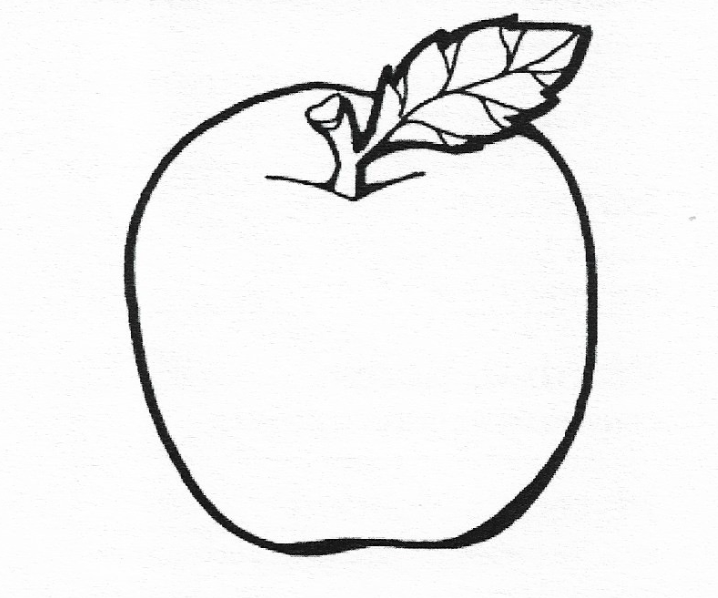
Enlarge and make enough copies of the apple patterns so that each child in class can have one. Write the following promises on a chalkboard or newsprint pad.
1. promise to _____________ for my dad this week.
1) buy a new car
2) repair the roof
3) rake the leaves
4) other
2. I promise to give my teacher _____________.
1) my full attention
2) an apple
3) a raise
4) other
3. When Mom works late, I promise to ____________.
1) pay her overtime
2) help with supper
3) complain to her boss
4) other
4. If my little sister is sick, I promise to ____________.
I) make her well
2) cheer her up
3) read her a story
4) other
5. If my friend forgets to study for a test, I promise to _____________.
1) make sure he gets an A
2) offer to let him copy off mine
3) help him study before class
4) other
6. I promise to ________________ my dog this week.
1) build a new house for
2) feed and water
3) teach a new trick to
4) other
How to Teach This Lesson
Begin this lesson with the following activity. Ask the students how they feel when someone makes them a promise and doesn't keep it. Tell the kids to choose and complete one of the statements and write it on their apple. Tell them to choose a suggestion that they feel they can keep. They can also make up their own promise for "other." Remember. "A promise is only
as good as the one who makes the promise."
God's Promises to Abraham - When God called Abraham to leave his family, his home and the land of his fathers, God promised to lead him, to give him a new land, to bless him and to make of him great nations. It took a lot of faith for Abraham to leave everything he knew and to start out on his journey. But, Abraham thought about Who was making these promises. He "is the King of glory - the Lord who is strong and mighty" (Psalm 24:8 NIrV).
Promises Kept - Ask: Is God able to keep His promises? (Ask one of the students to read Jeremiah 32:17.) As Abraham packed his belongings, he had no idea where he was going - but God did. God knew exactly where this new land was and how to get there. Abraham didn't need a map, he was following the One who made the earth. He didn't need to stop and ask directions, God knew the right path to take. God led Abraham all the way. When they arrived, God showed Abraham the mountains, the valleys, the rivers and cities. He promised to give all that land to him and to his descendants. Abraham's herds and flocks grew and multiplied in the new land. Even though he left his home and family, God blessed Abraham in the new land. And after many years of waiting, God gave a son to Abraham and Sarah. He kept his promises!
Our Promises- Ask the students to list as many promises that they can think of that God has made to them. List these on a newsprint pad or blackboard. Put a + next to the ones that have already been fulfilled, and an O next to ones that will be fulfilled in the future. Then ask: How do we know that God will keep these promises? (Ask someone to read 2 Peter 1:3-4 and quote the memory verse.)
Our God has the power to do what He says, He loves you and wants what is best for you, and He doesn't lie. He wants you to trust His promises and obey His commands.Then He will lead you through this life (Proverbs 3:5- 6). He will give you everything you need to live a godly life (2 Peter 1:2). He will bless those who are faithful in serving Him (Proverbs 28:20). And, He has given us the gift of eternal life through His Son, Jesus (Romans 6:23).
Review Questions
1. How can we know whether or not we can trust someone to keep his promises?
2. Name four things that God promised to Abraham
3. Explain how God kept His promise to make great nations from Abraham's descendants.
4. How do we know that God will keep His promises to us?
Teacher-Directed Activity
Using the apples from the beginning of the lesson, discuss some of the promises the kids chose. Ask the class if each is a promise that can be kept. Is it within their power to fulfill the promise? (Some student may want to change their promise.) Tell them to take their apple home and give it to the appropriate person.
REACH Activity
Back to the Bible: A Type
God often gives us physical examples so that we can understand Him better. For example, Jesus tells us that He is the Bread of life. From this we come to understand that He has to be part of our lives if we’re going to live. Jesus tells us He’s the Door. That helps us to understand that there’s only one way to get into God’s kingdom - through a relationship with Jesus Christ.
God also gives us people who are types of Jesus Christ so that we can understand both the Father and Jesus better. For instance, Aaron was the first High Priest. He made intercession for the people before God. Jesus Christ is our High Priest and makes intercession for us before God the Father.
*Isaac was the son God promised to Abram. In the same way, Jesus is the Son God promised He would send to the world.
*Isaac was named by God. The Father also told Mary what Jesus’ name would be.
*Abraham and Sarah had to wait a long time (25 years) for Isaac’s birth. The world had to wait until the time was right for the birth of Jesus.
*Isaac’s was a miraculous birth. Jesus’ was a miraculous birth.
*God’s covenant with Abraham would extend through Isaac. God’s covenant with His people comes through Jesus.
Write these in your own words - maybe in a different format/chart - in your Bible notebook. Leave room to add more to the comparison list. We will add some other parallels in subsequent lessons.
Journal Jot: Your Response
Think about the point of this lesson: God has made many promises. He has the power to fulfill all of them. He is faithful and cannot lie; God will do what He says He will do. Knowing this, what do you trust God to do? How does knowing this change your behavior? Which promise means the most to you right now? After answering these questions in your Bible notebook, write a prayer thanking God for His faithfulness to you.
Word Study: plerophoreo
In this week’s memory verse (Romans 4:21), the Greek word for “absolutely sure” is plerophoreo. It carries the meaning of being fully persuaded. There is nothing that will change that person’s mind.
Think of five things that you are absolutely sure of. Write them down in your Bible notebook. What kinds of things are you absolutely convicted of? Are they short-term or long-term events? Do they have to do with you or God? What can you absolutely count on?
Just Toolin’ Around: God’s Promises
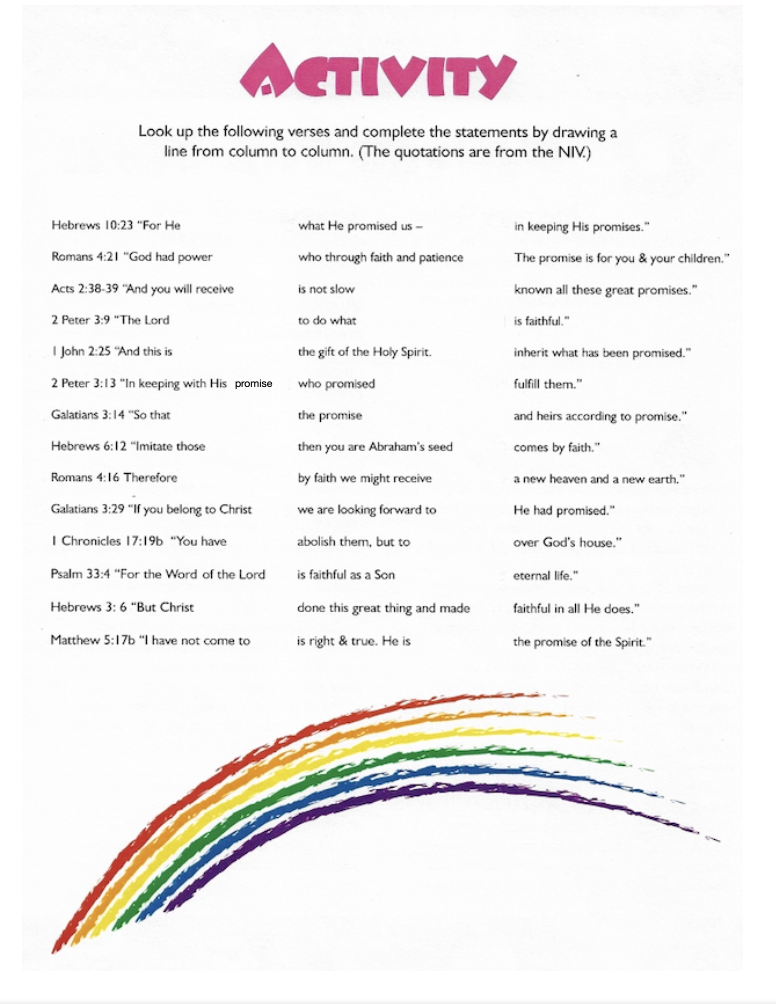
The 14 verses cited in the activity in the student’s lesson are not the only promises that God has made. Using a concordance, find 5 more. Write them in your Bible notebook. Then share them with your family.
Did you Know? Naming the Child
Do you know who named Abraham and Sarah’s son? God did. Do you know what Isaac means? It means “he laughs.” Do you think God wanted Isaac named this to remind Sarah that she laughed when told that she would have a son when she was 90 years old? Or do you think it was to remind them that God knew just how much joy and delight that child would bring to his parents? Or do you think it was both?
Do you know what your name means? Do you know why your parents chose to give you the name you have? If you don’t, go find out. Write down what you discover in your Bible notebook.
Stretch It Out: God’s Promises
The student activity for this YEA lesson has 14 incredible verses. Using these verses, make a 3-D floral arrangement. Using different colors of construction paper, create 3-D flowers. Write the words to each verse on the petals and the scripture reference on the leaves. Display in a glass vase in your living room.
Music Notes: Standing on the Promises
This hymn is on page 24 of the CEM Hymnal.
Russell Kelso Carter wrote the words and music to this hymn. His life reflected the truth expressed in the words he wrote - “that only as we stand on God’s promises are we enabled to live with purpose for God’s glory.” Mr. Carter was an athlete, a minister, a sheep rancher, a professor, a publisher of various textbooks, a practicing physician, as well as a hymn author and composer. (Source: Amazing Grace, Kenneth Osbeck, 1990, pg. 85.)
Oh that we all would be fruitful for God’s glory in everything we undertake, completely standing firm on the word of God!!
Questions?
Write down any questions you have in your Bible notebook so that you can remember to ask your parents or your pastor.
Song
"My God Is So Big" is on page 14 of Kids Classics Collection.
Closing Prayer
Remind the students that God keeps His promises and can be trusted. Encourage them to thank God for His blessings, His promises, and His involvement in their lives.
Printable Pages