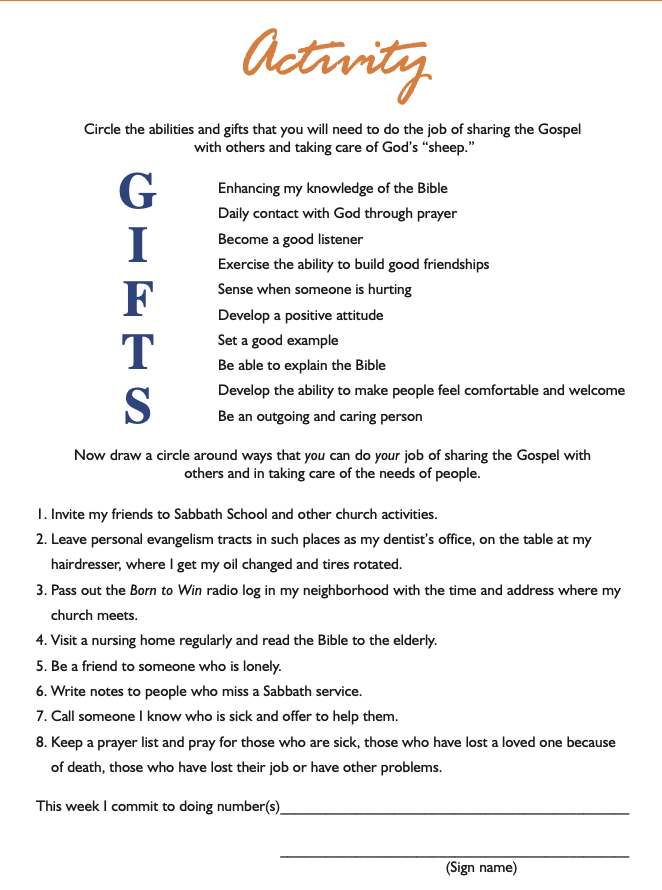
YE5C.1 · Activity Page
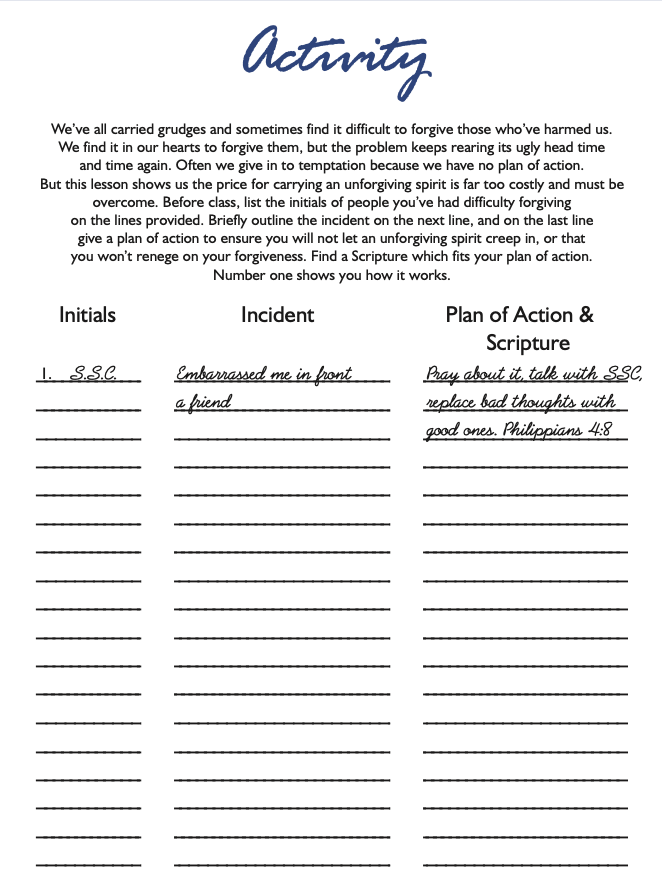
Psalm 51
Psalm 103
Proverbs 24:17-29
Matthew 5:7, 40-48
Matthew 18:21-35
Matthew 18:32-35
Mark 4:22
Mark 11:25-26
John 8:3-11
Romans 12:14-21
Colossians 3:9-17
RENEGE - To go back on one’s word
Butch awakened to one of those beautiful August mornings in the hills of Kentucky. There was something very special about sleeping in one of his grandma’s beds. Her beds were higher than his own, and the quilts strangely gave the right amount of cozy warmth to help him sleep deeply through the night. Waking up was always an adventure. Once the aroma of breakfast filled the large Cape Cod house, no one could sleep a moment longer. Butch had to get up and rush to the kitchen. Grandma knew that farm workers needed to eat heartily, and Butch was never one to disappoint her.
At the end of the kitchen hung a small cage for Grandma’s newest prized possession – Joey, the parakeet. Joey provided a great deal of enjoyment for Grandma as she went about her endless tasks. He would sing to her, and she would whistle a tune back to him.
Butch loved to spend his summers on the farm where he could help with the hay baling, fish for bass and crappie, eat green apples fresh from the tree and listen to the farmers as they sat around the pot bellied stove at the General Store. About the only thing that really bothered Butch was the repeated daily admonition from Grandma to be careful not to leave the back door open. She had a strong feeling that animals should never be confined completely – they needed some freedom, too. So Joey was often allowed to fly freely throughout the house.
The inevitable day came too soon for anyone. Butch forgot that Joey was flying free. He didn’t even notice that when he went out the back door, Joey flew out with him, never to be seen again.
Grandma had been crying when he got back from the creek ready to clean his catch for the morning. It was obvious that she was trying to restrain her emotions. As soon as she told him that Joey was missing, Butch knew what had happened. It was history now, and could never be corrected. He had hurt one of the people who meant the most to him – and all he could do was say, “I’m sorry,” and that felt terribly inadequate. Grandma’s sadness seemed to last forever, but she willingly forgave Butch, and her forgiveness was complete. She never chose to make Butch repay what he had cost her, nor did she ever demean him for his thoughtless deed by saying, “I told you. . .” Her love for Butch was greater than anything he could do to hurt her.
But what if Butch hurt her again, maybe by breaking a family heirloom? Do you think his grand- mother would have forgiven him again? Just how clumsy and irresponsible could Butch have been and still have his grandmother’s forgiveness?
Peter asked Jesus that question in Matthew 18:21-35. Jesus replied by saying that we should forgive a person seventy times seven, that is to say unlimited times. Then He proceeded with a story comparing the Kingdom of Heaven with a king who thought it was time to get his books in order and bring them up to date. A debtor, who was brought before the king, owed him millions of dollars, but couldn’t afford to pay the debt. The king gave orders for the man, his wife, and his children to be sold as slaves. This was devastating news for this man. So he fell on his face in the dust before the king and begged for mercy and patience and promised to repay the money. The king was filled with pity for the man and released him and forgave his debt.
The forgiven man’s contrition was soon forgotten. Another man owed this forgiven debtor $2,000. So he hurried on over to see him. He grabbed him by the throat and demanded that he be paid instantly. This man was also devastated and fell down before the forgiven debtor pleading for mercy. He promised that he would pay him back if he would be patient. The forgiven debtor wouldn’t wait and had the man who owed him just $2,000 thrown into jail until he could pay up.
Do you think the forgiven debtor got by with this most unmerciful behavior? Of course not! Mark 4:22 says, “For what ever is hidden is meant to be discovered, and whatever is concealed is meant to be brought out into the open”(NIV). You can count on it, sooner or later evil or wrong doings will be found out. So what happened to this unforgiving man? The man’s friend went to the king and told him just how unmerciful the forgiven man was.
The king sent for the man he had once forgiven and said, “You evil-hearted wretch! Here I forgave you all that tremendous debt, just because you asked me to – shouldn’t you have mercy on others, just as I had mercy on you? Then the angry king sent the man to the torture chamber until he had paid every last penny due” (Matthew 18:32-34 TLB).
Why do we want to see the other person pay the full penalty for his wrong, yet we want mercy? Why is it that we say we forgive a person, and before we know it we’re back chewing on the problem? Can you renege on your forgiveness? What are the consequences of being unmerciful and harboring bitter attitudes against those who have harmed us? Jesus says, “So shall my heavenly Father do to you if you refuse to truly forgive your brother” (verse 35). Strong stuff!
Just like Butch, we all have been guilty of hurting people, whether intentional or not. Each time we commit a sin, against people or against God, we hurt someone. The Bible tells us what we should do and what we should not do. God’s way is the way of forgiveness – complete and unconditional forgiveness – regardless of what the other person may have done. Forgive is a verb – it takes action!
Awesome God,
You are so loving, so merciful and so forgiving. While we were yet sinners you gave your Son as a ransom for our sins. Help me each day to follow Jesus’ example and to forgive others completely and unconditionally.
It’s in Jesus’ name I pray.
Amen.
Sunday: Proverbs 24:17-29
Monday: Matthew 5:7, 40-48
Tuesday: Mark 11:25-26
Wednesday: Psalm 103
Thursday: Romans 12:14-21
Friday: Psalm 51
Saturday: Colossians 3:9-17
1 Kings 3:5-14
Proverbs 15:25-33
Proverbs 31:30
Mark 10:42-45
Mark 10:43-45
Mark 11:1-11
Luke 9:48
Romans 12
Philippians 3
James 1
James 4
1 Peter 5:1-6
TRIUMPHAL - in victory
HUMILITY - modest
Rejoice greatly, O my people! Shout with Joy! For look – your King is coming! He is the Righteous One, the Victor! Yet he is lowly, riding on a donkey’s colt. I will disarm all people of the earth, including my people in Israel, and he shall bring peace among the nations. His realm shall stretch from sea to sea, from the river to the ends of the earth” (Zechariah 9:9-10 TLB).
Zechariah foretold this event over 400 years before it happened. The story is told in all four Gospels. But what is the joyful event you just read about? What impact does it have on your life today and in the future?
A few days before the Passover on which Jesus was crucified, Jesus and His disciples came to the Mount of Olives in Jerusalem. Jesus told two of His disciples to go ahead of the others to the next village. “There will be a donkey tied there with it’s colt beside her. Untie both of them and bring them to me” Jesus said. “If anyone asks you why you are taking them, just say, ‘the Master needs them,’ and you won’t have any trouble taking them.”
The two disciples did what Jesus told them to do. They brought the donkey and her colt to Him. Some of the people threw coats over the animals. They were ecstatic because they thought Jesus had come to deliver them. People started throwing their coats down on the road. Other people cut branches from the trees and spread them out before Jesus as He rode into Jerusalem. They shouted praises saying, “Praise God in the heaven!” The entire city of Jerusalem was excited and joyful. The crowd of people said, “See, your king comes to you, gentle and riding on a donkey, on a colt, the foal of a donkey.”
Jesus was born as a baby to become the King of kings. But first He had to qualify. To qualify meant that He had to first be lowly and humble. Then He had to give the ultimate sacrifice – His life for your sins.
Riding on a colt, a foal of a donkey, was the lowliest form of transportation. Historically kings ride on horses. You can look up videos of when Queen Elizabeth of England would ride in her fabulous gold-trimmed carriage pulled by some of the most beautiful horses to be found. Most of us think of a king or queen having the best. But when Jesus was on this earth, He certainly didn’t have the best physical things. He wasn’t proud, arrogant or haughty. His entry into Jerusalem, as well as His ministry and His entire physical life, demonstrates that Jesus was a remarkably humble man. He was a king who lived like a carpenter and died like a criminal. Think about this. Do you know of any human king who would demean himself to the point of riding into town on a donkey? A camel or elephant, possibly, a great stallion, very likely, but a lowly donkey?
Every day of His life Jesus put into practice the sayings He gave His disciples. He told them that whoever wants to be great must first be humble as a servant. Jesus lived the perfect example of humility. Jesus was a humble man who prayed and kept His Father’s commandments. It’s not always easy to follow His example, and indeed it may be difficult at times. But it is right and the way to gain eternal life.
When Christ returns to this earth, He won’t be riding on a lowly donkey. His meekness, humility and perfect life that He lived qualified Him to return in all greatness and splendor as the King of all kings. This time instead of riding a donkey, He will be on a magnificent white horse.
“Then I saw heaven opened and a white horse standing there; and the one sitting on the horse was named ‘Faithful and True,’ the one who justly punishes and makes war. His eyes were like flames, and on His head were many crowns. A name was written on His forehead, and only He knew its meaning. He was clothed with garments dipped in blood, and His title was ‘The Word of God.’ The armies of heaven, dressed in finest linen, white and clean, followed Him on white horses. In His mouth He held a sharp sword to strike down the nations; He ruled them with an iron grip; and He trod the winepress of the fierceness of the wrath of Almighty God. On His robe and thigh was written this title: ‘King of Kings and Lord of Lords’” (Revelation 19:11-16 TLB).
What a vision! And what a reward for us to be considered “great” in such magnificent company!
Almighty Heavenly Father,
Thank you for Jesus Christ coming to this earth to set me an example in humility. Even though He is your Son, He humbled Himself to die for my sins. Shine a clear light on my path each day that I might humbly walk before you as Christ did. Give me the strength and determination to do it. Father I am weak and need your help.
In Jesus’ name.
Amen.
Sunday: Romans 12
Monday: Philippians 3
Tuesday: James 4
Wednesday: 1 Peter 5:1-6
Thursday: Proverbs 15:25-33
Friday: 1 Kings 3:5-14
Saturday: James 1
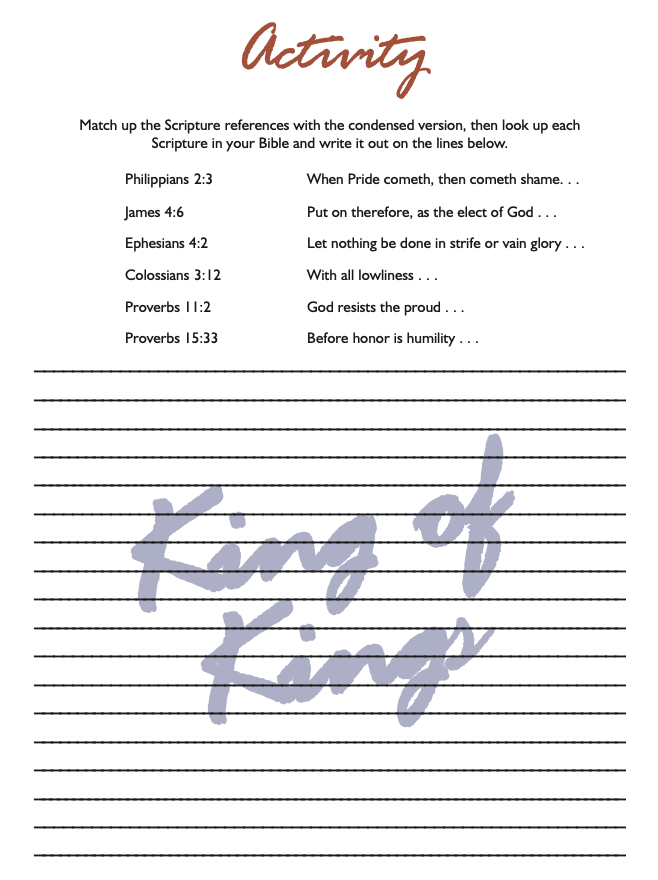
Job 31:13-15
Psalm 33:13-15
Isaiah 56:1-8
Matthew 20:25-28
Matthew 21:12-15
Mark 10:42-44
Mark 11:15-18
Luke 19:45-47
John 2:14-17
John 2:17
Acts 10:28-38
Galatians 3:24-29
MONEYCHANGERS - They would trim or clip small amounts of silver and gold from coins, and they charged to change money.
SCOURGE - A small whip
SACRED - Set apart for the service of God
The muscular young man strolled through the gate. As He walked He braided a bunch of small cords into a scourge. His Father, a master architect, had lovingly designed every detail of this truly beautiful Temple as a special place of worship. The only conditions were that it be honored and respected as the sacred House of God. Everyone agreed that this was not much to ask for such a grand place, but as years went by abuse crept in. Now it was little more than a market place.
Inside, the moneychangers called out and vendors hawked their wares. Oxen, sheep and crates filled with doves added to the confusion. The odor of manure mingled with the fragrance of incense offered by priests, and God’s Temple smelled like a barn. The young man looked around Him and His disappointment was replaced by disgust and righteous anger. The building was the Temple of God in Jerusalem. The young man was Jesus.
The Temple was not designed by men. God gave explicit instructions for the building of this splendid place; it was literally to be the House of God. The most important building in Israel, the hub of all activities, the Temple was the focus of religion and everyday life. Rich in symbolism, and full of meaning, it was to be a sacred and holy House of Prayer for all people. “As for the Gentiles, the outsiders who join the people of the Lord and serve him and love his name, and are his servants and don’t desecrate the Sabbath, and have accepted his covenant and promises, I will bring them also to my holy mountain of Jerusalem and make them full of joy within my House of prayer. I will accept their sacrifices and offering, for my Temple shall be called ‘A House of Prayer for All People’” (Isaiah 56:6-7 TLB).
To make things more convenient for pilgrims, moneychangers and cattlemen set up their businesses in the Court of the Gentiles - in the part of the Temple where Gentiles were allowed to worship God. The merchants, however, were corrupt in their dealing with the pilgrims. The dishonest moneychangers trimmed coins and unfairly charged those who came to make offerings. The animals to be used as offerings and sacrifices were sold at inflated prices. The only place in the grand and glorious Temple where Gentiles could worship had been turned into a foul-smelling public market and a den of thieves. Because the Pharisees were in on it, the Jewish leaders were robbing Gentiles of their spiritual privilege to worship God as promised them.
How do you think Jesus felt when He entered the Temple and saw what they were doing? Do you think He was angry? If so, why? Jesus was angry, but He did not lose control. Jesus saw what they were doing was wrong and He knew He had to deal with it. He cracked His whip stampeding oxen and sheep into head-long flight. He overturned the tables of the moneychangers. Doves flapped wildly in their crates, wood splintered and feathers flew as His voice rang out, echoing through the Temple: “My house will be called a house of prayer for all nations.” And the reaction of the Jewish leaders? They would have killed Jesus if they hadn’t feared the people.
He had courage, you might even call it gumption. Do you know what gumption is? A person with gumption is aware of what is happening and where it will lead. He doesn’t sit around just stewing about things. He’s an action person. Gumption begins with a firm commitment, which Jesus had. He saw well where this was leading and was committed to ensuring that Jews and Gentiles could worship in the Temple. He didn’t allow the peer pressure of the moneychangers or even the religious leaders in the Temple to cause Him to rethink, ponder or fiddle around. What they were doing was wrong and He had the gumption to put an end to it now!
Gumption requires discipline. Jesus was angry, but had the discipline not to loose control. The people and the religious leaders were corrupt. To many, making the desired changes could have seemed overwhelming. But Jesus knew that He had to deal with each situation in its proper time. The same thing is true in our lives. Our life is like a marathon. The 26 plus miles in a marathon aren’t run in one big jump. We have to take one step at a time, always planning and watching for things that could hinder us in reaching our goal. Gumption comes easier when we recognize that the finish line has its own unique rewards. Jesus knew what His final reward was. And He wants you to share in His character and His reward.
Jesus Christ came to save all people, not just Jews, not just Israelites. He died for everyone of us. That includes you.“For God so loved the world that He gave His only begotten Son that whosoever believeth in Him should not perish, but have everlasting life” (John 3:16). When Jesus saw what was right to do, He didn’t rethink, ponder or fiddle around. What type of life do we owe Him for giving His all for us? We owe him a disciplined life with gumption. A life with a firm commitment to our Savior. A life with a passion to serve Him!
Gracious Father,
Thank you for the love that you have for all peoples. Although we believe that the United States and Great Britain are nations of Israel, we know that Jesus came and died for the Gentiles as well. Help us to have the same passion to see Gentiles saved as Jesus has.
It’s in Jesus’ name we pray.
Amen.
Sunday: Job 31:13-15
Monday: Psalm 33:13-15
Tuesday: Matthew 20:25-28
Wednesday: Mark 10:42-44
Thursday: Galatians 3:24-29
Friday: Isaiah 56:1-8
Saturday: Acts 10:28-38

Exodus 12:1-14
Numbers 9:6-14
Matthew 26:20-30
Mark 14:12-26
Luke 22:7-20
John 13:1-38
1 Corinthians 11:23-34
1 Corinthians 11:28
PASSOVER - The original Passover celebrates the death angel passing over the first-born without killing them. Christians today celebrate it on the same night that Jesus kept His last Passover as a memorial to His death for our sins.
CULMINATION - The highest point
All across Egypt families wailed and cried with grief. Not an Egyptian family was spared from the death of its firstborn son the night of the first Passover. God had told Moses and Aaron that He would smite all the firstborn males in the land of Egypt, both man and beast. Judgment time had come upon Egypt for mistreating the Israelites and for not allowing them to leave Egypt to keep God’s feast. The night of the first Passover the death angel passed over the houses where the blood of a lamb was on the doorpost – their firstborn was saved from death. Where there was no blood on the doorpost, the firstborn male in every family, both human and animal, died that night.
That Passover was only a type of Jesus’ destiny. All of the lessons we have learned in this Life of Christ series are narratives leading to the culmination and climax of this most sobering occasion. Jesus was born as a human baby for this very purpose, to die for your sins.
Jesus knew that this particular Passover dinner was special. It meant that His death was near. It was His last night on earth before returning to His Father. Jesus knew that He would not be with His disciples for their next Passover meal; He knew that He would not be able to eat it again with them until He partakes of it with them in God’s Kingdom. He also knew that one of those eating this very special meal with them would be His betrayer. He loved His disciples very much and this was very disturbing. This Passover was a time of both great love and great agony.
As this Passover approached, Jesus talked with His disciples. “As you know, the Passover celebration begins in two days, and I shall be betrayed and crucified” (Matthew 26:2 TLB). Even while He was talking with His disciples, Jewish leaders were meeting at the house of Caiaphas, the High Priest, plotting to kill Jesus. They devised a plan to capture Him quietly. They knew that if they did it during the Passover celebration, riots could erupt.
While the Israelites were cleaning the leavening out of their houses, the disciples came to Jesus and asked where they would be keeping the Passover. Jesus instructed these men to go into the city and see this unnamed man and tell him that Jesus would be eating the Passover with His disciples at home. The men followed Jesus’ instructions.
After Jesus sat with His disciples and ate the Passover meal, He took off His robe and wrapped a towel around Him. He poured water into a basin and began to wash the feet of each man. Peter protested, “Master, you shouldn’t be washing our feet like this!” Jesus told Peter that he didn’t under- stand why He was doing this. “If I don’t wash your feet, you can’t be my partner” Jesus replied. Then Peter was anxious for Jesus to wash his feet. Jesus explained that He was setting an example. Since He had washed their feet, they ought to wash each other’s feet as well. “How true it is that a servant is not greater than his master. Nor is the messenger more important than the one who sends him. You know these things, now do them! That is the path of blessing” (John 13:16-17 TLB). Jesus was in great anguish of spirit and said, “One of you will betray me.” A chill came over the room as this statement tore the heart out of every man there. No one thought they would betray Jesus. Each one of them began to ask, “Is it I?” Jesus replied that it was the man He served first. Then Judas asked, “Am I the one?” Jesus answered in the affirmative. Satan entered into Judas and Jesus told him to hurry up and do it now.
As they were eating, Jesus took unleavened bread, blessed and broke it and gave the disciples a piece to eat. He said, “Take and eat, for this is my body.” Then He took the cup of wine, blessed and gave it to them as well. “This is my blood, sealing the New Covenant. It is poured out to forgive the sins of multitudes” (Matthew 26:27-28 TLB). They sang a hymn before going to the Mount of Olives.
This covenant renewal with Jesus, done by the taking of the bread and wine, is most important for Christians. For Jesus says, “With all the earnest- ness I possess I tell you this: Unless you eat the flesh of the Messiah and drink his blood, you cannot have eternal life within you. But anyone who does eat my flesh and drink my blood has eternal life, and I will raise him at the Last Day” (John 6:53-54). What does your Bible say about simply going through this ceremony when the heart is not right? “But let a man examine himself, and so let him eat of that bread, and drink of that cup. For he that eats and drinks unworthily, eats and drinks damnation to himself, not discerning the Lord’s body” (1 Corinthians 11:28-29). Self examination and repentance are very important before we take the Lord’s Supper.
The Passover is filled with history and significant meaning. It’s a time of love, a time of forgiveness, a time to examine ourselves and a time to renew our covenant with Jesus Christ. Our prayer as we remember the body and the blood of Christ each year should focus on Jesus Christ and the supreme sacrifice that He paid for our sins. We should remember His sadness at that special time. We should remember that Christ gave His life for our sins. We should resolve to live a life more pleasing in His sight. And we should remember the joy of His promises.
Gracious Father,
Thank you for the supreme sacrifice that Jesus paid for my sins. At each successive Passover help me to come to deeper repentance and to walk even closer to my Savior Jesus Christ.
It’s in His name that I pray.
Amen.
Sunday: Exodus 12:1-14
Monday: John 13:12-26
Tuesday: Matthew 26:20-30
Wednesday: 1 Corinthians 11:23-34
Thursday: Numbers 9:6-14
Friday: Mark 14:12-26
Saturday: Luke 22:7-20
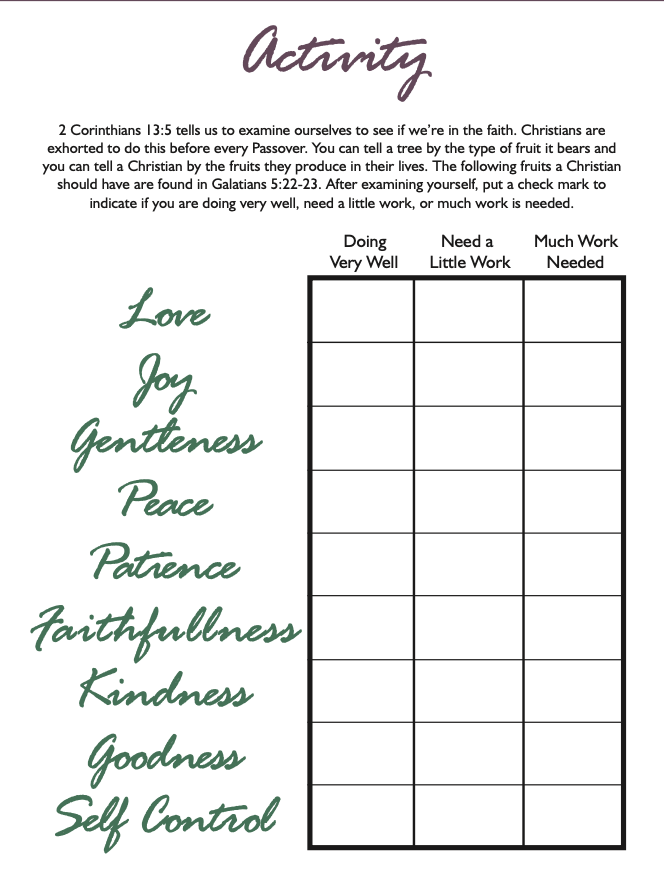
Matthew 26:36-46
Mark 14:32-42
Luke 22:39-46
John 17:1-26
Acts 4:8-12
Romans 3:23
Romans 6:16-23
Philippians 3:7-14
Hebrews 9:18-28
STAKE - A post pointed at one end for driving into the ground. As a form of punishment in biblical times, people were nailed to a stake and left to die.
REDEMPTION - Deliverance from sin, atonement for sin.
In the 1998 hit movie, “Saving Private Ryan,” Tom Hanks plays the part of Captain John H. Miller of the US Army during World War II. After successfully securing a beach during D-Day on June 4, 1944, Captain Miller is given a specific assignment. He is to take a support unit of 8 men and locate Private James H. Ryan of Iowa whose 3 brothers all perished during the raids. The movie chronicles their trek across the fields of France in search of what Captain Miller calls “a needle among the needles.”
In selecting the members of the unit to support him, Captain Miller knew that he would need an interpreter who knew both French and German fluently. The only person with those particular skills happened to be a young corporal – a map maker who had not lifted a weapon since his days in basic training. The corporal understood the need for his linguistic skills, but could not fathom what other use he might be, and, in fact, considered himself to be a potential drain on the others.
After finding Private Ryan, the captain and his unit found that they were likely to come under some severe fire from approaching Germans. He loaded the young corporal with a calculated variety of ammunition. He gave him detailed instructions to keep watch for whoever had the most immediate needs. The linguist was unaccustomed to the rigors of battle and the multiple types of ammunition he was carrying. The young corporal felt that he was ill-equipped to adequately handle his assignment. Because of his feelings of inadequacy, he nearly cost the unit the success of its mission.
Even though Jesus’ disciples had spent three and a half years training under Him, when the chips were down and the real test came they appeared ill-equipped. These men were from a variety of back- grounds and each felt differently about their own qualifications to handle their assignments. Nearing the end of His life, Jesus asked three of them, Peter, James and John (the two sons of Zebedee) to perform a simple, yet very supportive role – to wait and watch with Him. He needed them to give their presence, prayers and support. They were equipped to handle His requests, but failed the test. They did not fully understand the mission of Christ, and thus failed to see the importance of the supportive role they were asked to play.
After partaking of the Passover with Jesus, His disciples went with Him to the Garden of Gethsemane in a supportive role. The weight of all the sins of the world were upon Jesus. He told His disciples to sit down and wait while He prayed. Peter, James and John went with Him. By now, His anguish and despair were almost unbearable. “My soul is crushed with horror and sadness to the point of death . . . stay here . . . stay awake with me.” He said. He took a few steps and fell on His face on the ground and prayed, “My Father! If it is possible, let this cup be taken away from me. But I want your will, not mine.”
He went back where His disciples were sitting and found they had fallen asleep. Becoming increasingly certain of what the next day held for Him, His anguish alone was deep enough to almost kill Him. He wanted His disciples to stay awake and pray. Yet at a time like this, there was no support from His disciples. They fell asleep. “Peter, couldn’t you even stay awake with me one hour?” Jesus asked. “Keep alert and pray. Otherwise temptation will overpower you. For the spirit indeed is willing, but how weak the body is!” (TLB).
Jesus felt the overpowering need to go back and pray again; “My Father! If this cup cannot go away until I drink it all, your will be done.” Jesus was tempted to seek an alternative to fulfill His Father’s redemptive purpose. He may not have known whether any other way was possible. He agonized in prayer and was supernaturally strengthened (Luke 22:43). Through it all, He learned that to do the will of His Father, there was no other way than to submit to the excruciating death on the stake.
Again when He returned, His disciples were asleep. So, He went back the third time and prayed the same thing. He now knew that He must give the supreme sacrifice – His life – for your sins and mine. Then Judas arrived with the Jewish leaders to arrest Him, try Him and then crucify Him.
Oftentimes, we do not understand the importance of the situation and our supportive role. Neither did the disciples understand the awesome events taking place before their own eyes. Their understanding did not come until after Christ’s death, resurrection and the arrival of the Holy Spirit on the day of Pentecost.
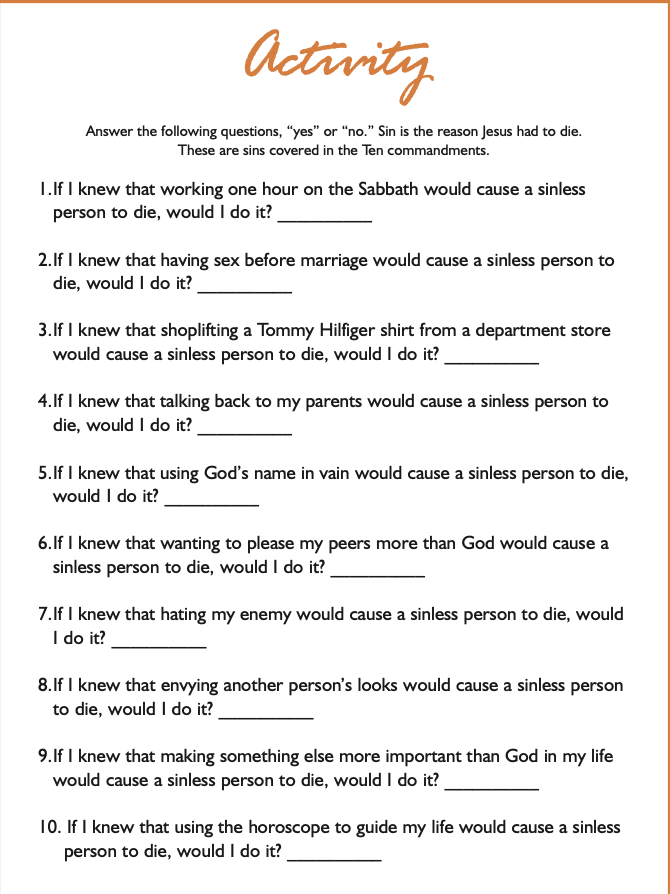
What took place on the Passover was the greatest gift ever given for you. Jesus Christ’s death on the stake provides you with the only way that you can escape death for your sins. Jesus passed the test, and He did it without any help from a human being. It’s not often that the test we face is death. Your test will most likely come in such forms as: will you work on the Sabbath, failure to study and pray, use profanity, etc. When these things are put in perspective, they seem insignificant compared with the test Jesus faced in the Garden that night. But every day that passes, we have to decide if we will do God’s will or ours. Just as Jesus had no support from any human being, you may not have it either. But as Jesus had the help of His Father in heaven, you can also have it. When your test comes, are you willing to say as Jesus did, “Not my will but your will be done in my life”?
Most Holy Father,
I bow before you totally unworthy of the sacrifice that Jesus Christ gave for my sins. I am weak and need your support in coming to know you. I want to repent of my sins and receive Jesus Christ as my Savior and be baptized. Help me return to the correct way and to always follow your lead.
It’s in the name of Jesus that I pray.
Amen.
Sunday: John 17:1-26
Monday: Mark 14:32-42
Tuesday: Matthew 26:36-46
Wednesday: Hebrews 9:18-28
Thursday: Romans 6:16-23
Friday: Acts 4:8-12
Saturday: Philippians 3:7-14
Isaiah 53:1-12
Matthew 10:32-33
Matthew 26:14-16
Matthew 26:47-56
Mark 14:1-11
Mark 14:43-72
Luke 22:47-61
John 18:1-12
BETRAYAL - To deliver or expose an enemy by treachery. To be disloyal to one’s friend.
FRIVOLOUS - Lack of seriousness.
Ben was ambitious. He always wanted more. By the time he was 21, he had become a pharmacist and a book seller, even though his main interests were elsewhere. In his early thirties, he joined the armed forces to fight for his country and to follow the dreams of his youth. He quickly rose to the rank of colonel and successfully led the troops he had developed against the enemy at the age of 34. He was wounded in a particularly unsuccessful assault, a sortie he commanded at the request of the highest general of the American forces. As a result of his bravery and leadership abilities, he was appointed brigadier general. Not all of his battles were successful, but his talents were legendary. After several setbacks, he grew to feel victimized by events beyond his control. At 38, after more than three years of valiant combat leadership for America, he secretly offered his services to the enemy and gained the level of fame he had sought. You’ve studied the history of America’s most infamous traitor, Benedict Arnold, in your American History class. He became a household name, not for his many talents, abilities and successes, but rather for his betrayal of his country.
During Benedict Arnold’s career with the American revolutionaries, General George Washington was his staunchest defender. Washington repeatedly engineered the appointment of him to positions of authority and responsibility. When he was forced into a position of reprimanding Arnold, Washington did so reluctantly and with great compassion. The ensuing defection must have been felt with deep pain and sorrow. Betrayal of a close and trusted friend is devastating.
Judas Iscariot was with Jesus and His followers for more than three years. He was a constant companion of his leader and was prominent in many of the activities. Yet, in the end, he proved to be a traitor. His ambition and personal desires were stronger than his loyalties and eventually became his obsession. Thirty pieces of silver were more important than the mission he had followed so faithfully with the other disciples. Surely, he had heard the same message and seen the same miracles that the others had witnessed. And, of course, there were instances where he considered the mission to be a failure. He saw the “wasted” precious oil being frivolously poured over Jesus’ head. As the trusted keeper of the meager funds, he saw what he considered to be repeated missed opportunities to make more money and to use it for the good of others. And he saw other disciples being rewarded more handsomely than he. Frustration continued to grow in Judas’ heart.
At long last, Judas considered the mission of Jesus to be a failure. It became painfully evident to him that the long anticipated coup that was to result in Jesus being the King was not going to occur. The Romans had won out; the Jews were against them; there was no way the planned revolt was going to be successful. Since they were going to win anyway, Judas decided he could help them and profit from his knowledge of where Jesus would be when they were searching for Him.
Jesus had just finished praying the most heartfelt prayer of His life. Three times He asked His Father to find another way than having Him suffer such a painful death. Yet, He prayed “but I want your will and not mine.” At that very moment Judas showed up with men armed with swords and clubs, sent by the Jewish leaders. Judas truly played the hypocrite. He had the nerve to embrace and kiss Jesus while he was betraying Him for a measly 30 pieces of silver.
Simon Peter became indignant about the chief priests and Pharisees coming to arrest Jesus. He drew his sword and immediately slashed off the right ear of Malchus, the High Priest’s servant. Jesus said, “Peter, put your sword up,” for He knew this was all a fulfillment of prophecy.
What about Jesus’ view and His feelings toward Judas? What were His feelings when He told Judas, “What you do, do quickly,” after giving him a piece of bread? How did He feel as Judas approached Him, kissed Him and said, “Greetings, Rabbi!? Did Jesus choke on His own words as He said, “Friend, why have you come?” when He already knew the answer? Can we possibly imagine the emotions that must have run deep inside His soul? Even though He had divine knowledge, does that remove the pain of betrayal by a trusted friend?
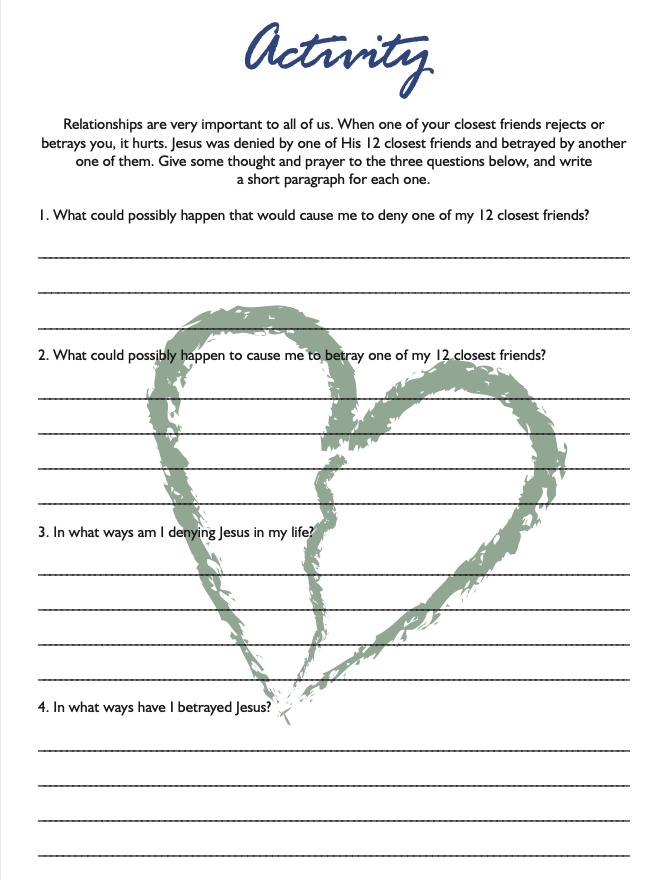
Have your friends betrayed you in some way? Of course, they have – some intentionally and some quite accidentally. Can you recall the range of emotions that you felt deep inside? Can you rise to a challenge? Can you forgive them? Can you pray for them? Can you truthfully wish them well? But more importantly, have you betrayed Jesus? It probably wasn’t for 30 pieces of silver, but there are any number of ways we can betray our Savior. Have you ever denied Him as Peter did three times? Do you betray Him with your actions of disobedience? “While we were yet sinners, Christ died for us.” He is truly worthy of our loyalty, obedience and trust. Our actions should show these things daily!
Dear Father,
It’s easy to look at Judas and condemn him. But how often have we betrayed your Son who gave His all for us. Help me to examine myself. If I had been with Jesus that night, would I have sold Him for 30 pieces of silver? Give me the strength to love, honor and obey your Son and my soon coming King.
It’s in His name that I pray.
Amen.
Sunday: Mark 14:43-49
Monday: Mark 14:50-65
Tuesday: Mark 14:66-72
Wednesday: Isaiah 53:1-12
Thursday: Matthew 26:14-16
Friday: Luke 22:47-61
Saturday: Mark 14:1-11
Deuteronomy 30:19-20
Matthew 27:26-66
Mark 15:1-39
Luke 23:1-56
John 3:14-17
John 18:28-40
John 19:1-38
Acts 2:36-39
SCEPTER - a highly ornamental rod or staff held by rulers on ceremonial occasions as a symbol of sovereignty.
The Israelites of Jesus’ time were looking earnestly for the Savior. They had been told that He would come and be their King and would fulfill the promises that had been given to their forefathers. Jesus did not fit their image of a King. He was not fighting for their freedom; He was not leading the revolt against the Romans in the way they expected. He was calling the Pharisees and Sadducees hypocrites; He was telling them that their way of worshiping God was misdirected. Rather than listening to His message, they became angry – extremely angry!
The entire council took Jesus over to the residence of Pilate, the Roman Governor, after He was arrested in the Garden of Gethsemane. They began to accuse Him. Pilate asked Him, “Are you the Messiah?” Jesus replied that he was. After that, He remained silent through many accusations against Him. Pilate knew that they looked on His teachings as a threat to their way of doing things.
While Jesus’ trial was taking place, Pilate’s wife sent him a message saying that she had a dream to leave Jesus alone. It was Pilate’s custom to release one prisoner during the Passover season. And Pilate’s wife was hoping that he would release Jesus. Jesus and Barabbas were the two prisoners being considered to be released that day. But in the meantime, the Jewish religious leaders persuaded the crowds to ask for the release of Barabbas, who was a notorious prisoner. So Pilate asked the crowd, “Which of these two shall I release to you?” The crowd shouted back, “Barabbas!” Then Pilate asked, “What shall I do with Jesus, your Messiah?” The crowd shouted, “Crucify Him!” Pilate demanded to know why, but the crowd kept shouting, “Crucify! Crucify!"
Riots were developing, and Pilate saw that he wasn’t getting anywhere. So he washed his hands in a bowl of water to show he wanted nothing more to do with the matter. The people said, “His blood be on us and on our children?” They stripped Jesus and put a scarlet robe on Him. Pilate laid open Jesus’ back with a leaded whip, and the soldiers made a crown from long thorns and forced it down on His head causing Him to bleed. They put a stick in His hands saying, “This is your scepter.” They knelt before Jesus and mocking said, “Hail, King of the Jews.” They spit on Him and beat Him on the head with sticks. When they finally tired of this sport, they took the robe off and put His clothes back on Him. Then they led Jesus to be crucified. Simon of Cyrene was coming in from the country, and they forced him to carry Jesus’ stake to Golgotha. Roman soldiers nailed Him to the stake and thrust the stake, with Jesus nailed to it, into a hole. He was suspended between heaven and earth to die.
While the soldiers watched Him die, they gambled for the clothes He wore. They put a sign above His head that said, “This is Jesus, the King of the Jews.” People passed by and shouted abusive remarks about Jesus. The Chief Priest and Jewish leaders also mocked Him. “He saved others,” they scoffed, “but he can’t save himself!” At noon the earth became dark as night. About three o’clock, Jesus shouted “Eli, Eli, lama sabachthani,” which means, “My God, my God, why have you forsaken me?” Even His Father turned His back on Jesus because He had to suffer the full penalty for our sins. Someone ran and dipped a sponge in vinegar, put it on a stick and held it up for Jesus to drink. When Jesus tasted it, He wouldn’t drink it. He cried out again, then He died. The curtain in the Temple, which secluded the Holy of Holies, split from top to bottom, and an earthquake shook the ground.
The Holy Day began at sunset, and the Jewish leaders didn’t want the victims to still be hanging there. So Pilate gave orders to the soldiers to break their legs to hasten their deaths and to finish this horrible process before the Feast day began at sunset. When they got to Jesus, they found that He was already dead. A soldier pierced His side with a sword and blood and water flowed out. This fulfilled the Scripture that said not one bone would be broken. There was even more to it than just fulfilling this Scripture. It was necessary for His blood to be shed for you to have forgiveness of your sins (Hebrews 9:22).
Jesus lived a perfect life. Yet, He died an excruciating criminal’s death. Why? John 3:14-17 says, “And as Moses in the wilderness lifted up the bronze image of a serpent on a pole, even so I must be lifted up upon a pole, so that anyone who believes in me will have eternal life. For God loved the world so much that he gave his only Son so that anyone who believes in him shall not perish but have eternal life. God did not send his son into the world to condemn it, but to save it” (TLB).
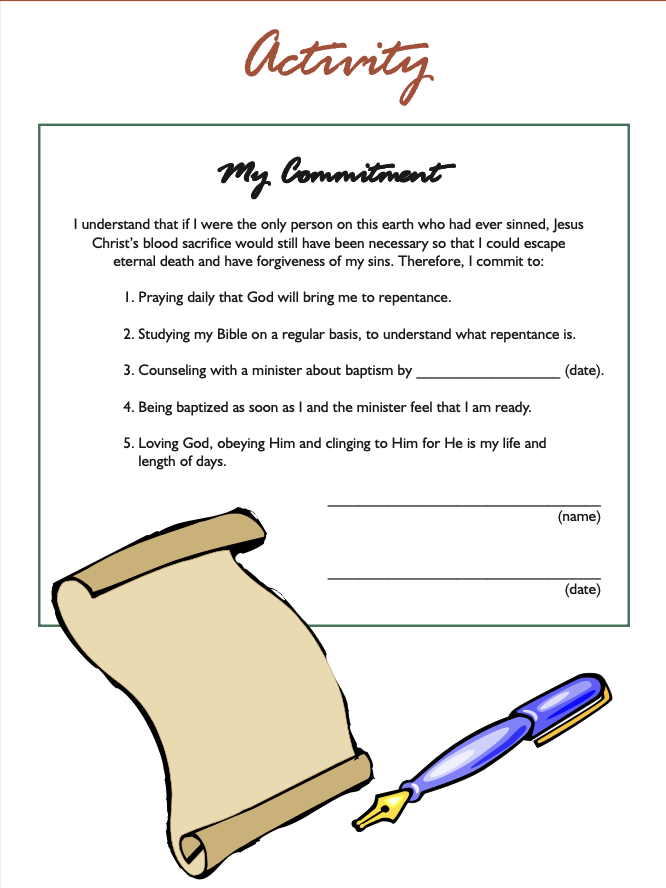
It’s all too easy to think how awful and cruel the Roman soldiers and Jewish leaders were who killed Jesus. Yes, they were, but what about you? Acts 2:36 and Acts 4:10 tell us that we too crucified Jesus. If you or I had been the only sinner on this earth, He would still have died for our sins. How can we ever make it right with our crucified and resurrected Savior? “Each one of you must turn from sin, return to God, and be baptized in the name of Jesus Christ for the forgiveness of your sins; then you also shall receive this gift, the Holy Spirit” (Acts 2:38 TLB). God gave His Son in order that you can be saved from the death you deserve because of your sins. But you must believe on Him; you must repent; and you must be baptized. “I call heaven and earth to witness against you that today I have set before you life or death, blessing or curse. Oh, that you would choose life; that you and your children might live! Choose to love the Lord your God and to obey him and to cling to him, for he is your life and the length of your days” (Deuteronomy 30:19-20 TLB).
Gracious Father,
It’s very humbling to understand what Jesus went through because of the many times I’ve broken the Sabbath, disobeyed my parents, stolen from others, used your name in vain and fallen short of complete obedience. Please forgive me and set my feet in the right path. Help me to come to repentance and to be baptized in Jesus’ name.
It’s in His name that I pray.
Amen.
Sunday: John 18:28-40
Monday: Luke 23:1-31
Tuesday: Matthew 27:31-44
Wednesday: Matthew 27:45-52
Thursday: Matthew 27:62-66
Friday: Mark 15:1-39
Saturday: John 19:1-30
Jonah 1:1-17
Matthew 12:38-40
Matthew 12:39-40
Matthew 27:51-52
Matthew 28:1-15
Mark 15:42 - 16:20
Luke 23:47-56
Luke 24:1-48
John 19:31-42
John 20:1-24
1 Corinthians 15:12-20
MORGUE - A place where dead bodies are kept.
EMBALM - A treatment of a dead body to preserve it.
CHRONOLOGY - The sequential order in which things occur.
The earth rumbled and shook. Rocks broke. Tombs opened and many godly dead men and women came back to life. At the very moment that Jesus died, the curtain in the Temple was torn in two from top to bottom. “Destruction of the outer veil would primarily symbolize the forth coming destruction of the temple, while the destruction of the inner veil would primarily symbolize open access to God” (The Expositor’s Bible Commentary, page 580). By now, the soldiers at the crucifixion were not only terrified, but convinced that Jesus was indeed the Son of God.
Women such as Mary Magdalene and Mary, the mother of James and Joseph, watched from a distance as prophecies were fulfilled before their eyes. These women were Galileans who often traveled with the disciples to care for Jesus’ needs out of their own resources.
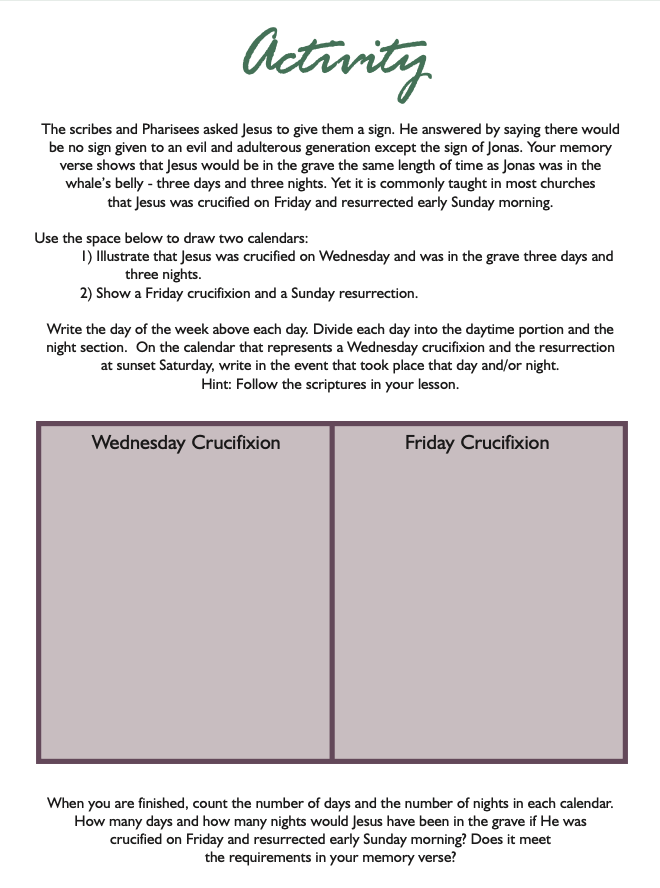
According to the Scriptures, Jesus died on the Passover. And it was now late that afternoon. There was an urgency to get Jesus’ body down from the stake and in the grave before sundown because the Sabbath was approaching. Joseph of Arimathea, a very wealthy man, mustered his courage to ask Pilate for the body of Jesus. Pilate gave orders to the soldiers that the body be handed over to him. Then Joseph took the body off the stake, wrapped it in clean linen and rushed to place it in his own new rock-hewn tomb before sunset. This was late Wednesday and the Holy Day began at sunset (John 19:31). The chief priest and Pharisees asked Pilate to give orders to have Jesus’ grave closely guarded for three days. They remembered that Jesus had said, “After three days I shall rise again.” They wanted to make sure that no one stole Jesus’ body during those three days, so soldiers stood guard.
When the Sabbath, which was the First Day of Unleavened Bread, was over (Thursday, Mark 16:1), Mary Magdalene, Salome and Mary the mother of James purchased and prepared spices to embalm Jesus’ body (Friday). Then they rested on the weekly Sabbath (Luke 23:56). Very early Sunday morning they took the spices they had prepared to the tomb.
As they walked toward the tomb, they dis- cussed how they would roll the huge stone away from the entrance of the sepulcher where Jesus was buried. As they approached the burial site, they were very surprised to see the stone wasn’t there. An angel was sitting inside and all the linen cloths that Joseph wrapped Jesus in were there as well. But Jesus wasn’t anywhere to be found. This frightened the ladies. But there was an angel there. And the angel admonished them not to be frightened and said, “Jesus, which was crucified, is not here, He is risen. Go tell the disciples that He is risen. Go, and you will see Him.”
As two of the disciples left Jerusalem and went toward Emmaus, they talked about all the events that had happened in the last three days. Jesus appeared to them and walked along beside them, but they didn’t recognize Him. He said, “What are you talking about and why are you so sad?” Cleopas said, “You’re just a stranger in Jerusalem and don’t know everything that has happened.” Jesus asked, “What things?” They related details of Jesus being arrested by the chief priests and rulers, and how He was condemned to death and crucified. Besides, they said, “This is the third day since He was crucified and the women who visited the tomb this morning didn’t find Him there. Others went to His tomb after we told them He was missing and they didn’t find Him there either.” Jesus said, “Why are you so slow to believe what the prophets have said?” Their eyes were opened and they finally recognized Jesus. Then He vanished out of their sight.
The chronology of these events is very important because it verifies that Jesus was in the grave three days and three nights. Jesus prophesied the length of time that He would be in the grave in Matthew 12:40. “Only an evil, faithless nation would ask for further proof; and none will be given except what happened to Jonah the prophet! For as Jonah was in the great fish for three days and three nights, so I, the Messiah, shall be in the heart of the earth three days and three nights. Jesus was very specific about the length of time He would be in the grave. A Friday crucifixion and Sunday morning resurrection is only half the time Jesus said that He would be “in the heart of the earth.”
But what does all of this mean to you? It means much more than just being able to prove to a friend that Jesus was not crucified on Friday. We are forgiven of our sins by the shed blood and death of Jesus Christ. “Without the shedding of blood there is no forgiveness of sins” (Hebrews 9:22b). But we are saved through His life (Romans 5:10). If Jesus had not come out of that tomb, you would have no hope of salvation. The wages of sin is death. Because you have sinned you would be condemned to die with no hope. But Jesus did come out of that tomb exactly when He said that he would, and He lives today!
He sits on the right hand of the Father as your intercessor. He’s there to plead your cause when you do sin. Think of the enormity of what Christ has done and is doing for you. Doesn’t He deserve the best you can give Him every day of your life?
Most Gracious Father,
Thank you for the supreme sacrifice that your Son paid for my sins. Thank you also for resurrecting Him on the third day. It is through His life that I can have eternal life. Help me always to live a life worthy of that reward.
It’s in Jesus’ name I pray.
Amen.
Sunday: John 19:31, 20:1-14
Monday: 1 Corinthians 15:12-20
Tuesday: Mark 16:1-8
Wednesday: Luke 23:50-56
Thursday: Luke 24:1-12
Friday: Jonah 1:1-17
Saturday: Matthew 12:38-40
Leviticus 23:9-14
Mark 16:1-14
John 20:17-19
John 20:29
Romans 8:16-23
1 Corinthians 15:20-28
James 1:1-20
Revelation 14:4
Revelation 20:5
PROTOTYPE - The original model on which something is based or formed.
Early Sunday morning Mary went weeping to Jesus’ tomb. She stooped down and looked inside the tomb that had been carved into the side of a hill. Two angels were sitting where the body of Jesus had been lying. She was heartbroken that Jesus’ body was gone, because she feared it had been stolen. As she cried, she looked over her shoulder and Jesus was standing there. At first
she didn’t recognize Him. When she realized who He was, probably her first inclination was to give Him a big hug. But that was not to be. “Don’t touch me,” He cautioned, “For I haven’t yet ascended to the Father.”
Later that evening the disciples, except for Thomas, were locked in a room because they were afraid of the Jewish leaders. All of a sudden Jesus was standing in the room with them. He showed them the nail prints in His hands and where His side was pierced with a sword. The disciples knew it was Jesus and were over- joyed to see Him. When they saw Thomas they told him that they had seen Jesus, but Thomas didn’t believe them. “I won’t believe it unless I see the nail wounds in his hands – and put my fingers into them – and place my hand into his side” (John 20:25 TLB). Now we know why he’s called, “Doubting Thomas.”
Eight days later the disciples went into a room again and locked the door behind them. Thomas was there that day. And again, Jesus suddenly appeared in the room without unlocking the door. He knew that Thomas had doubted His resurrection and wanted proof that He was not an impostor. Jesus told Thomas to put his fingers on His hands where the nails had been driven and his hand on His side where the sword was thrust. Jesus said to Thomas, “You believe because you have seen me. But blessed are those who have not seen me and believe anyway” (John 20:29 TLB).
Why did Jesus allow Thomas to touch Him when He would not allow Mary to touch Him? Was this a sexist thing? No! As you read the New Testament you’ll find that Jesus was a real supporter of women. The significance is far greater than you might initially see. In Leviticus 23 God instructed Israel of old about keeping the Passover and Days of Unleavened Bread. He explained that on the day after the Sabbath, which is Sunday, they were to bring a sheaf of the firstfruits of their harvest to the priest. “And he shall wave the sheaf before the LORD, to be accepted for you: on the morrow after the Sabbath the priest shall wave it” (verse 11). So what’s the significance?
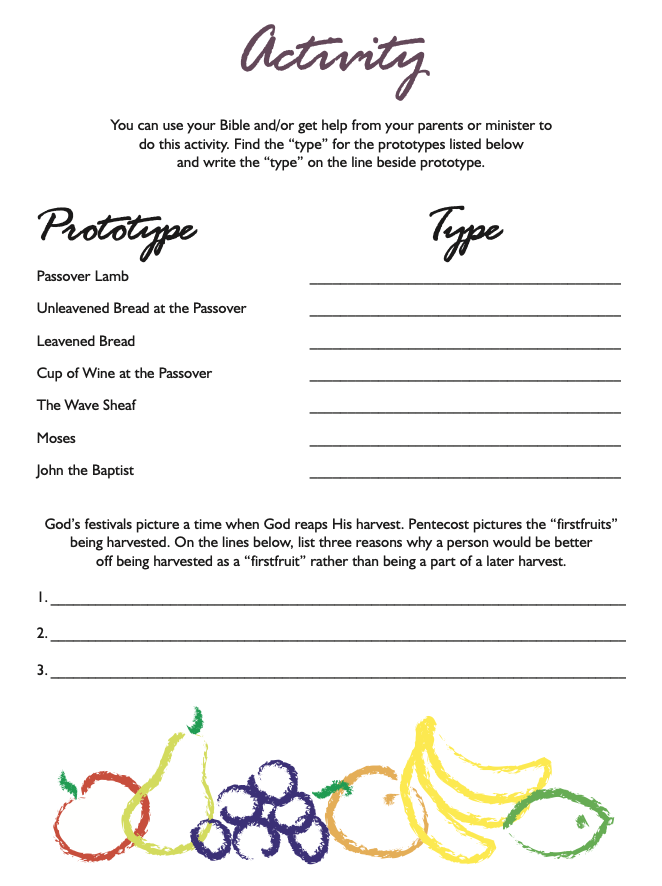
God’s holy days are loaded with symbolism and typology. The Passover lamb was a type of Jesus Christ. The unleavened bread that we eat at the Passover symbolizes the broken body of Christ. The small cup of wine we drink at the Passover symbolizes the shed blood of Jesus Christ for our sins. The sheaf of grain that was cut to be waved before God was cut Saturday about sunset. It was probably cut at the time Jesus came out of the tomb, the year Jesus was crucified. Jesus Christ was the first of the firstfruit of the harvest (1 Corinthians 15:20).
The reason Jesus told Mary not to touch Him was because He had not ascended to His Father. This was because He had not gone to heaven to present Himself to God to be accepted as a wave sheaf for you. We read in Leviticus 23:11 that the priest was to wave that sheaf of the firstfruits on Sunday. For Jesus to be your Passover Lamb, He had to fulfill the requirements of the law. The entire package was not complete until He was presented to the Father and accepted as a pure sacrifice for you.
What significance does all of this have for you? Baptized believers of Christ are a kind of firstfruit (James 1:18 and Revelation 14:4). The “firstfruits” will be resurrected at the return of Jesus Christ. “Then I saw thrones, and sitting on them were those who had been given the right to judge. And I saw the souls of those who had been beheaded for their testimony about Jesus, for proclaiming the Word of God, and who had not worshiped the Creature or his statue, nor accepted his mark on their foreheads or their hands. They had come to life again and now they reigned with Christ for a thousand years. This is the First Resurrection (The rest of the dead did not come back to life until the thousand years had ended)” (Revelation 20:4-5 TLB). The significance for you is that if you’re a “firstfruit,” you will be resurrected 1000 years before those who are not! Like Christ, you’ll be accepted of the Father. You’ll get to enjoy the most wonderful time on the face of this earth when Jesus sets up His Kingdom. Being a firstfruit is worth working for. Yes, it has great significance.
“And even though Jesus was God’s Son, he had to learn from experience what it was like to obey, when obeying meant suffering. It was after he had proved himself perfect in this experience that Jesus became the Giver of eternal salvation to all those who obey him” (Hebrews 5:8-9 TLB).
Great and Awesome God,
Thank you for such a marvelous plan. Thank you that your plan includes me. Help me to come to repentance, to be baptized and to endure to the end. I want to be a firstfruit in the first resurrection.
I pray this in Jesus name.
Amen.
Sunday: Mark 16:1-14
Monday: Leviticus 23:9-14
Tuesday: James 1:1-20
Wednesday: Romans 8:16-23
Thursday: 1 Corinthians 15:20-28
Friday: Revelation 14:4, 20:5
Saturday: John 20:17-19
Matthew 28:16-20
Mark 16:19
Luke 24:44-53
John 14:12
John 21:15-25
Acts 1:1-11
1 Corinthians 1:24-28
2 Corinthians 8:1-7
2 Timothy 1:1-7
Hebrews 6:1-11
James 1:21-27
PRO-ACTIVE - To control an unexpected occurrence or situation.
EMPOWER - To give official legal power or authority to. To endow with an ability; enable.
School was out and it was time for Joey to spend the summer with Grandma and Grandpa on the farm in the hill country. He looked forward to eating Grandma’s cooking, playing baseball with his cousins and friends and helping his uncles bale hay in the fields. During those hot summer evenings he ate green apples as he pulled smallmouth bass out of the creek. No chore was too burdensome in the country. Joey actually looked forward to drawing water out of the well and helping around the farm.
As June turned into July and later into August, Joey’s thoughts invariably turned toward home. It wouldn’t be long now before school would begin – always the day after Labor Day. He would surely miss the activities in the country, but he knew that he had to go home. He never felt it was something he “had” to do; he really looked forward to going home again.
So it was with these anxious thoughts of going home that Joey stood by the rickety old bridge and watched for his father’s car. There weren’t very many cars that came down the old dirt road, and you could see their dust almost a mile away, even before they rounded the curve and came into sight. Joey remembered how he had stood by the bridge and watched his father’s car just a few months ago as it rounded the curve and disappeared from view.
Nearly 2000 years earlier, Jesus’ Apostles stood in the field with their eyes toward the heavens. They watched anxiously as they saw His body taken up into the air. Each one of them had witnessed parts of His life and been touched by it. There were wonders and miracles and disappointments; He had healed many, but He had not established His Kingdom in the manner they had expected. But then they witnessed Him after His resurrection, and gained a new perspective. They had a new promise and a job to do.
Before Jesus ascended to heaven He appeared again to His disciples – this was the third time since He had returned from the dead. He had finished having breakfast with them, and He asked Peter, “Do you love me more than these others?” Peter first answered, “Yes, you know I am your friend.” Well, that didn’t exactly answer the question that Jesus asked. But Jesus replied by telling Peter to “Feed my lambs.” Then He slightly reworded the question by saying, “Peter, do you really love me?” “Yes, Lord,” Peter said, “you know I am your friend.” Now that wasn’t what Jesus asked either. But Jesus told him to “Take care of my sheep.” Jesus came back the third time and asked, “Peter, are you even my friend?” This really grieved Peter because of the way Jesus asked this question, and he said, “Lord, you know my heart, you know I love you.” Jesus’ reply to Peter’s third answer was, “Take care of my sheep.” Jesus’ thoughts and concerns were that a dear friend continue to follow Him and that he take care of His followers. Jesus had a job for Peter to do.
The disciples thought that Jesus would set up His Kingdom on this earth at that time. Like most of us, they wanted to know the time and date of His return. But Jesus said that He didn’t even know that, only His Father knows. But He didn’t leave them hopeless. He didn’t leave them powerless. And He didn’t leave them without a job to do. He told them to wait in Jerusalem and they would receive the gift God the Father promised – the power of the Holy Spirit. This was the power to do the work of God. He had to return to His Father before this could happen. Jesus promised in John 14:12, “He that believeth on me, the works that I do shall he do also; and greater works than these shall he do; because I go unto my Father.” On the Day of Pentecost the Holy Spirit empowered the Apostles and Christians to do a work mightier than what Jesus had done. You have access to that same spirit of power, because Jesus went to the Father.
The job of taking care of and feeding His sheep is not unique to Peter. Matthew 28:19, 20 expounds on that job, “Therefore go and make disciples in all the nations, baptizing them into the name of the Father and of the Son and of the Holy Spirit, and then teach these new disciples to obey all the commands I have given you; and be sure of this – that I am with you always, even to the end of the world” (TLB). Just like the disciples, you also have a job to do.
As they saw the dust left behind and the car driving out of sight, Grandma and Grandpa were already missing Joey. Even though the disciples saw Jesus slowly disappear out of sight as He went to His Father, they did not have to miss Him because He is at the Father’s right hand making intercession for us. He left and went to heaven, and they became empowered with His Spirit on the day of Pentecost. We have hope as never before, we have power like the disciples had, and we have a job to do. But we must tap into that power through a daily relationship with our Savior. The power of the Holy Spirit can’t remain dormant in us. We must commit to being pro-active by utilizing that gift of power to feed the “lambs” and take care of the “sheep.” Jesus wants you to be pro-actively empowered and to be involved in making disciples and caring for His sheep.
Almighty God and Father,
Thank you for the sacrifice of Jesus my Savior. Thank you that He sits on your right hand interceding for me. He did not leave me without hope, without power or without a job. I need the power of the Holy Spirit helping me daily to do the job of telling others about you and taking care of your sheep.
It’s in Jesus’ name that I pray.
Amen.
Sunday: 2 Corinthians 8:1-7
Monday: Acts 1:6-11
Tuesday: James 1:21-27
Wednesday: Matthew 28:16-20
Thursday: 1 Corinthians 1:24-28
Friday: 2 Timothy 1:1-7
Saturday: Hebrews 6:1-11