YEA Lesson Library
The First Miracle
About This Lesson
This lesson emphasizes the consequences of alcohol abuse for teens.
Scriptures
Proverbs 2:1-5
Proverbs 20:1
Ecclesiastes 3:1-8
Matthew 4:23-24
Matthew 14:35-36
Mark 6:53-56
Luke 6:17-19
John 2:1-11
John 4:46-48
John 20:30-31
1 Corinthians 6:9-10
Words to Know
INTOXICATED - to temporarily diminish physical and mental control by means of alcohol, a drug or another substance
OBNOXIOUS - highly objectionable or offensive
The Lesson
Everyone loves a wedding. Wed-dings are romantic, usually beautiful, and can be such a gala, festive occasion. It was no different in Jesus’ day. Mary, Jesus’ mother, was a guest at a wedding in Cana, a village in the hills of Galilee. Jesus and His disciples were invited to the wedding as well. This wedding took place a few days after the baptism of Jesus. The Bible doesn’t tell us who the bride and groom were. They could have been relatives or just friends.
Since weddings in Palestine were a community celebration often lasting for several days, the family carefully planned the events giving much attention to every detail. Refreshments were provided for all the guests. To fail to provide adequately for the guests could mean social disgrace. But even with the best of plans, things go wrong. Somehow, they failed to have enough wine on hand for this wedding feast. Making such a social blunder could haunt the newly married couple.
Mary, Jesus’ mother, learned about the problem. She may have known that the Holy Spirit descending upon Jesus after His baptism gave Him new miraculous powers. So Mary went to her Son with the problem. Jesus said that He couldn’t help her now and said, “It isn’t yet my time for miracles.” He didn’t want to be distracted from His task.
Although Mary listened to Jesus, she also knew that He would take care of the problem because she, His mother, had requested it. She told the servants to do whatever Jesus told them to do. Six large stone water pots, used for Jewish ceremonial purposes, were standing there. Jesus told the servants to fill them with water. After this was done, He said, “Dip some out and take it to the master of ceremonies.”
The master of ceremonies tasted it and found it to be an excellent wine, better than what they had already served. He commented that usually the best wine is served first and the lesser quality served later.
Wine had the same effect on people then that it has today. It is an adult beverage that when used responsibly can make a feast more enjoyable. But wrongly used, alcohol can become a curse. It may seem cool to go to a keg party. Drinking may seem like a quick fix for disappointments or a source for courage. But teens are not old enough to experiment with alcoholic beverages.
Take a little time and think about the teens you know in school who have a drinking problem. Are they nicer, more likable people when they’re drinking? Or, do they become loud and aggressive saying things they would never say while sober? Has this created problems with their friendships? Do they have difficulty with their grades? Do they miss days of school or work because they are hung over or alcohol is beginning to take its toll on their health? Proverbs 20:1 says “wine gives false courage, hard liquor leads to brawls; what fools men are to let it master them, making them reel drunkenly down the street!” (TLB).
Now take a little time and think about adults who have drinking problems. Do you have friends whose parents are alcoholics? Are their families happy? Do they have financial problems? Do they have difficulty holding a job or getting the promotion that should come their way? Is this the kind of mom or dad you want? Is this the kind of person you want to become?
The leading cause of death among adolescents is drinking and driving. The earlier in life you start using alcohol and other drugs, the more likely you are to become dependent on them. It takes less alcohol to produce intoxication in teens than in adults. As a teenager, you can become addicted to alcohol faster than an adult. Addiction can occur within one or two years of regular use by adolescents. Addictions are difficult to overcome and most addicts don’t succeed. These substances can take away your dreams, ruin your family, job and health. But worse than that they can rob you of eternal life.
Then why is it okay for your mom and dad to enjoy a glass of wine occasionally with dinner and it’s not all right for you? Ecclesiastes 3:1-8 shows us that there is a right time for everything. The time has not come for teens to drink alcoholic beverages – they are simply too young. There are a lot of things that are okay for parents that aren’t all right for teens.
Then what is the significance of Jesus turning water into wine? Jesus honored His mother by fulfilling her request at this wedding feast. But He didn’t come into the world to alter or somehow resolve the inconveniences of life’s everyday problems. He came to do the Father’s will, to teach us God’s way, and eventually die for our sins.
Could it be as the Expositor’s Bible Commentary says, “Jesus had come to bring about conversion: water to wine, sinners to saints”?
Student Prayer
Dear Father,
Thank you for Jesus honoring His mother with such a beautiful miracle. Help us to understand its full significance. We know teens who misuse alcoholic beverages and are addicted to substances you never intended we use. Help me each day to look beyond the temporary pleasure of today. You have better things for me. I want to know the joy of being in your kingdom.
It’s in Jesus’ name I pray.
Amen.
Daily Devotions
Sunday - John 2:1-11
Monday - John 4:46-48
Tuesday - Matthew 14:35-36
Wednesday - John 20:30-31
Thursday - Matthew 4:23-24
Friday - Luke 6:17-19
Saturday - Mark 6:53-56
Objectives
At the end of this lesson, students will be able to:
1. Tell what Jesus’ first miracle was and give a possible significance.
2. Explain that alcoholic beverages are for adults and give reasons why teens should not drink them.
3. Explain that it takes less alcohol for teens to become intoxicated and addicted.
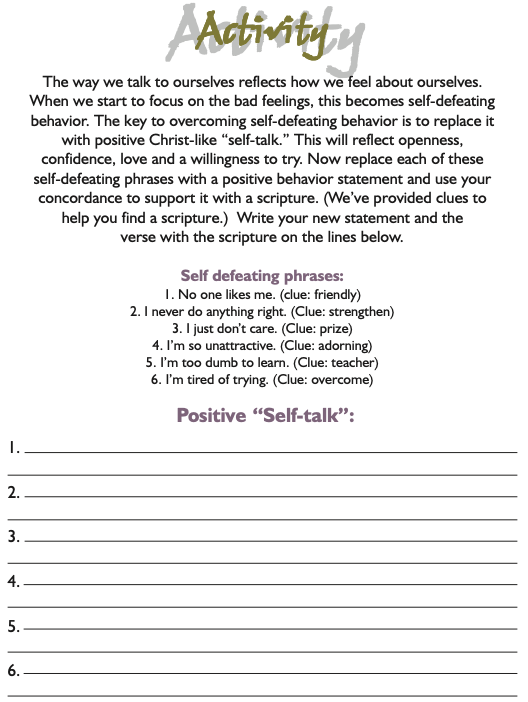
4. Analyze and compare self-defeating behavior with positive Christlike behavior.
Topics & Themes
Alcohol
Consequences of Sin
Jesus, His Miracles
Water to Wine
Materials Needed
Bible, YEA students and teacher’s books, attendance and memory verse charts, recording of the wedding march, music player, songbook, CD, reminders for the activity
How to Teach This Lesson
Have a tape recording of the wedding march playing to set an atmosphere as students arrive. The kids will probably comment about what they are hearing. Follow up with leading questions. By sequentially following the questions laid out below, you will be better equipped to complete every section, stay on track and meet the objectives of this lesson.
When you came into the room, what did the music make you think about? Did you kind of expect to see a bride walking down the aisle dressed in a gorgeous white gown? How many months do you think usually go into planning a big wedding? What about the wedding we read about in today’s lesson? Do you think more or less time went into planning that wedding than in most weddings today? Why? Weddings in that day were community celebrations lasting for days.
Jesus Himself attended this wedding. What significance can you draw from Jesus’ performing His first miracle, not by healing the sick, but at a wedding? (Try to draw everyone into the discussion by asking if they can think of any other possible significance or how they feel about the answers already given.)
What are your feelings when you see adults drinking alcoholic beverages and you’re not allowed to have any. Why is it okay for adults to have a glass of wine while teens shouldn’t? It is illegal for teens to drink. Their bodies are not mature enough to handle alcohol.
What risks are involved in starting to drink at a young age? Teens get drunk on less alcohol than adults and they become alcoholics faster.
How many of you have seen one or more of your friends drunk? What behavior did they display and how did they feel the next day? How did their sober friends react to them? Did their behavior make them more likable? Were they embarrassed when they knew their friends had seen them act like they did?
Have you noticed a correlation between substance abusers and kids with low self-esteem? Do you usually find that kids who have experienced disappointments or failure rely on alcohol or drugs to escape the situation rather than facing it courageously? How did their actions compound the problem rather than solve it?
What does the Bible have to say about drunkards?
Teacher-Directed Activity
Scatter the teenagers around the room so that each one stands alone. Repeat this sentence to each one of them and have them complete it. Say: I can get tough on drugs and alcohol alone by . . .
After everyone has completed the sentence, have the teenagers come together forming a circle. Then say: We can get tough on drugs and alcohol together by . . .let each one give an answer.
Song
“I Have Decided to Follow Jesus” is on page 60 of The Group Songbook.
Closing Prayer
After the activity, join hands as you pray and ask God to give each student the help and strength to stand up against the use of drugs and alcohol. Before class, find some small reminder of this and give it to each person to help them re- member to fight the problem of drugs and alcohol abuse.
Printable Pages