YE1A.1 · Activity Page
Isaiah 7:14, 9:6
Matthew 1:20
Luke 1:26-35, 2:1-20
Luke 2:14
John 7:42
STABLE - a barn where animals are kept
SWADDLING CLOTHES - cloth used to wrap a new-born baby
SHEPHERD - a man who takes care of sheep and protects them from wild animals
Sunday - Luke 1:26-27
Monday - Matthew 1:20
Tuesday - Luke 2:8-10
Wednesday - Luke 2:13-14
Thursday - Isaiah 9:6
Friday - Isaiah 7:14
Saturday - John 7:42
Storytelling: There’s something very powerful about telling a story. When you make eye contact, you are pulling the children into your words. Familiarize yourself so much with the details of this story that you can tell it, not read it.
Sheep: The YEA lesson already includes directions for making a paper bag and cotton ball sheep, as well as a suggestion for making sheep out of clay. You may also want to make some sheep out of cauliflower and toothpicks. Use the sheep as the springboard to talking about the birth of Jesus - the announcement made to the shepherds. (Isn’t it amazing that our God would choose to announce the One who would become the Lamb of God, who would become the Good Shepherd, to those who were caring for physical sheep?!)
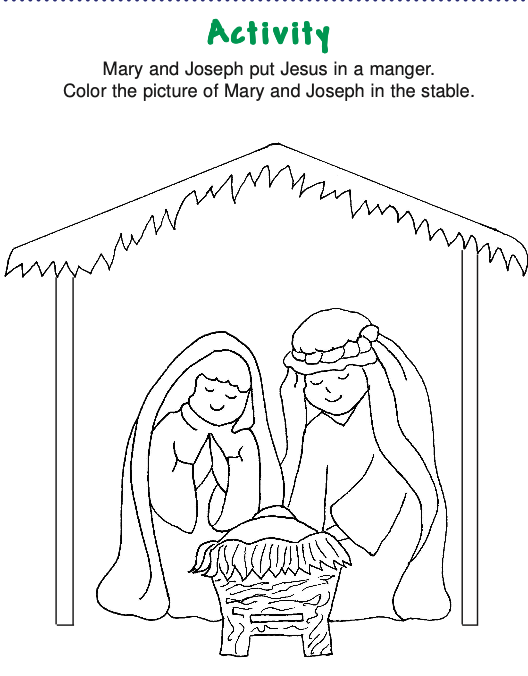
Treasure Hunt: After telling the story, take the kids on an I Spy treasure hunt looking for elements of the story: a sheep tucked away here, a donkey there, a star, a manger, straw, a map/globe. Each time they find something they have to tell you how it relates to the story. Use the coloring page in the student book for them to color as a finishing activity.
Good News: Ask the children if they’ve had any really good news lately. You may have to “prime the pump” by telling them some of your good news. Ask them how they would share that good news with someone else: telephone, letter, yelling, jumping up and down. God spread His good news with an angel and a bunch of shepherds. Tell the story with the emphasis on the best news ever. Have some stickers they can paste on a pastoral scene after coloring it.
The Letter B: The REACH activities focus on the letter “B” for this lesson. Have a big piece of poster paper. As you tell the story, have the children listen to pick out the words that begin with B: Bethlehem, baby, born, big, bright, blessing. Have them color in a bubble letter B.

Proverbs 1:8, 18:2
Luke 2:40
Luke 2:40-52
John 8:31
2 Corinthians 8:7
Colossians 1:10
2 Peter 1:5
PASSOVER - the day we remember God bringing Israel out of Egypt, and Jesus dying for our sins
SCROLL - an ancient book in the form of a rolled strip of paper
TEMPLE - God’s house where people went to read God’s Law and to pray
Sunday - Luke 2:40
Monday - 2 Corinthians 8:7
Tuesday - 2 Peter 1:5
Wednesday - Colossians 1:10
Thursday - Proverbs 18:2
Friday - Proverbs 1:7
Saturday - John 8:31
1. What Did I Forget? Have a suitcase and things scattered around the room (toothbrush, comb, Bible, sweater, slippers, watch, etc.). Tell the students you’re packing everything up to go home from a trip and you don’t want to forget anything. As they spy something, put it in the suitcase. Zip the suitcase and get ready to go. Then stop and tell them the story of Jesus’ parents going home from Jerusalem; they had been there to keep Passover and the Days of Unleavened Bread. It was three days before they realized Jesus wasn’t with them. Tell the rest of the story: where Jesus was, what he was doing, and why it wasn’t disrespectful to His parents, Mary and Joseph.
2. In the Company! (Invest in Bible felt or Bible character cardstock.) Using a felt board, tell the story from Luke 2:41-52. Talking points: How many people would you have to have traveling home before you missed your twelve year-old son? How long did they spend looking for Him? Where did they find Him? What was He doing? Even at twelve, He knew He was the Son of God. Even at 12, He already understood the scriptures well enough to amaze the teachers of the law. Talk about how He was not disobedient to Mary or Joseph, but even at 12, He had awareness of Who He was and His purpose: doing God’s work, the will of the Father.
3. Teaching with 3-D figures. Using clay figures, or finger puppets, or plastic toy people/animals, tell the story from Luke 2:41-52. Let the students do the moving of the pieces as you tell the story. Emphasize the same talking points: How many people would you have to have traveling home before you missed your twelve year-old son? How long did they spend looking for Him? Where did they find Him? What was He doing? Even at twelve, He knew He was the Son of God. Even at 12, He already understood the scriptures well enough to amaze the teachers of the law. Talk about how He was not disobedient to Mary or Joseph, but even at 12, He had awareness of Who He was and His purpose: doing God’s work, the will of the Father.
4. What’s Your Name? Ask each student what their full name is. Most 3-5 year-olds enjoy telling people all three names and they come out in a rush. Use this intro as s springboard into telling the story, emphasizing that even as age 12, Jesus already knew that He was the Son of God. He already had an astounding understanding of scripture. As you tell the story of Luke 2:41-52, remind the students that going off without your parents knowing where you are is not a good thing; it can be very dangerous. But Jesus, being the Son of God, was a special case.
5. Book vs. Scroll. Print out Psalm 119, one copy for each student in class. Print the chapter so that the paper can be cut to fit whatever you have to make the rods of the scroll. You could get dowel rods, straws, popsicle sticks, unsharpened pencils. Tape the paper into a long scroll and then tape it to the rods. Roll it up and tie it with ribbon. Begin the lesson by showing the students what Psalm 119:99 says. It takes some practice to unroll the scroll to the exact spot that you want to read from. Once you’ve shown them what it says, tell them the story of Luke 2:41-52. Tell them about Mary and Joseph finding Jesus after three days, in the temple, listening to the teachers and asking them questions. They were amazed at Jesus’ understanding of the scriptures and His answers. Emphasize again that Jesus was a special case; our children should never be left with an idea that they should go off without their parents knowing where they are.

Matthew 3:17
Matthew 3:13-17
Matthew 28:19-20
Mark 16:16
Luke 3:21-22
Acts 2:38, 41; 8:36-37
Colossians 2:12
BAPTIZE - to put completely under water in order to obey God and show that the bad things we have done have been washed away
MINISTER - a man who leads and helps the church
DOVE - a bird that pictures God’s Spirit
Sunday - Matthew 3:16
Monday - Acts 8:36-37
Tuesday - Acts 2:41
Wednesday - Mark 16:16
Thursday - Colossians 2:12
Friday - Matthew 28:19-20
Saturday - Acts 2:38
1. Sorting it Out. Read the lesson to the students. Then ask them to sort out the items which would be associated with a baptism, which would be associated with a bath, and which could be either one. Collection of items: bath towel, Bible, rubber ducky, scrub brush, soap, wash cloth, picture of a bath tub, picture of a baptismal, picture of a lake/ocean, stream. Allow them to physically move each item to separate them. Emphasize that baptism is not about getting the outside clean; it’s about a public confession of faith in Jesus Christ.
2. Baptizing Whom? Read the lesson to the students. Materials: basin of water, plastic dog or cat, doll. Ask them who is baptized. Do we baptize our pets? No. Why? Because baptism is not taking a bath; it’s a public confession of faith in Jesus Christ. Dogs and cats can’t make a public confession that they believe in Jesus. Put the dog in the water. Ask: is this baptism? No. As described in the teacher’s edition for this lesson, show the students how a baptism would work, using the doll as the visual.
3. Baptized When? Read the lesson to the students. Be prepared that once the students realize what baptism is, some of them may ask if they can be baptized right now. Since this is a profession of faith, they need to be old enough to realize what that means and mature enough for this to be their faith, not their parents’ faith. You might want to point out that Jesus was not a little child when He was baptized, even though we read in lesson two about how much understanding He had as a 12 year-old. When each person is old enough to be baptized should be a discussion they have with their parents and church leadership.
4. Well-Pleased. Read the lesson to the students. Jesus’ baptism was a choice which very much pleased His Father. Draw a large ribbon (or find a clip art award ribbon). Put the memory verse on the paper in outline letters. Have the students color the ribbon and color in the outline letters. Then the can decorate their ribbons with stickers, stars, foam pieces, or glitter.
5. What’s the Jordan? Read the lesson to the students. Write/print the memory verse across the top of a piece of 11 x 17 paper. Ahead of time cut out pictures from magazines of river scenes (State conservation magazines are a great source for crafts!) or print pictures of the Jordan River in Israel. Help the students glue the pictures onto the paper. Then color in the memory verse. If you don’t have magazines, draw a river picture. Give blue tempera paint to the students to use to paint the water. Remember that these kids often do not have fine motor skills.

Psalm 23:6; 84:10
Psalm 122:1
Isaiah 2:3
Haggai 2:7
Matthew 21:12
Mark 11:15
Luke 19:46
John 2:13-17
1 Timothy 3:15
Hebrews 2:12
GREEDY - taking more of something than you should and not considering others
WORSHIP - honor, devotion or reverence for God
RESPECT - to feel and show honor for someone
Sunday - Luke 19:46
Monday - Hebrews 2:12
Tuesday - 1 Timothy 3:15
Wednesday - Psalm 84:10
Thursday - Isaiah 2:3
Friday - Haggai 2:7
Saturday - Psalm 23:6
1. What’s Appropriate in God’s House. Bring some kids’ toys to class (the kind that other people buy for your kids, the ones which drive you nuts after 10 minutes). After welcoming the students to class, start playing the loud toys. These toys are designed to capture attention. Then put the toy out of reach (back in a bag or behind you). Read the lesson to the students. Talk about how loud and noisy the temple would have been with the merchants (selling lambs and doves) and the money changers. Talk about what should have been going on in the temple. Then talk about what is appropriate behavior at church today.
2. Distractions. Begin reading the lesson to the students. Have a helper who can start singing, dropping coins into a container, or playing with toys while you’re reading. The students will be distracted. Talk with them about the distractions of having money changers/merchants in God’s house. But also talk about reverent and appropriate behaviors in God’s house - back then and today.
3. Learning Styles. Read the lesson to the students. Have a bag of toys. Let the students decide which would be appropriate for church. The noise-makers wouldn’t be appropriate, but neither would balls or frisbees. Coloring books, crayons, puzzles, quiet activities are okay. But talk about the attitude of everyone who comes to church. Even puzzles and crayons can be inappropriate if the students are not using them quietly. Emphasize the importance of coming before God with reverence to worship Him. These students will understand this; they should be very used to their parents telling them to be quiet. What they might not understand is why. (Additional note: For those students whose learning style is not auditory, manipulating puzzle pieces, drawing, or coloring can actually improve their ability to listen. A very tactile learner benefits from keeping their hands busy. Too many times adults see a child coloring and think they’re not paying attention. They are often amazed at how very much the child heard and understood. Similarly, for an adult whose learning style isn’t auditory, they can get a lot more out of a sermon if they doodle in the edges of their church notebook.) After this discussion, have them complete the activity in their student workbook (legacy lesson) of circling what they would find in church.
4. Role Play. Read the lesson to the students. Role play the lesson. Take turns letting the students be Jesus, the merchants, money changers, worshippers, and priests. Then talk about how each would have reacted to what happened. Switch roles. Do it several times. (Note: Students this age don’t need the physical props to be able to role play, although having coins might help, i.e. coins flying everywhere as the table is overturned has a huge impact.)
5. The Right Way and the Wrong Way. Create a two-sided coloring page for the students. (There’s a lot of clip art that can be easily accessed online.) On one side, print lambs, doves, piles of money, lots of activity and people. On the other side, print a church scene where people are praying, singing, listening to a sermon, etc. On the second side, also print the memory verse in bubble letters. After reading the lesson to the students and talking about it, let the students choose their favorite coloring tools to color the two sides.

Psalm 37:25
Psalm 136:25-26
Matthew 6:26
Matthew 14:13-21
Mark 6:32-44
Luke 9:10-17
John 6:1-14
John 6:11
1 Timothy 6:6-8
MIRACLE - something that God does that man cannot do
SHARING - giving a part of what belongs to you to someone else
GIVING THANKS - praying to thank God for the food
Sunday - Psalm 37:25
Monday - Mark 6:32-33 T
uesday - Matthew 6:26
Wednesday - Matthew 14:13-21
Thursday - Luke 9:10-17
Friday - Psalm 136:25-26
Saturday 1 Timothy 6:6-8
1. How Many Beans? Count out 5000 pinto beans. Pour them out on a table. The visual/tactile reminder of how many people Jesus fed is a nice springboard into telling the story of Jesus feeding the 5000. (You may choose to read the lesson if you’re not comfortable telling the story.)
2. Are You Hungry? Place a small loaf of bread (preferably warm and homemade) on the table before the students. The smell of fresh, warm bread will make a huge impression. (Perhaps you can use a microwave to heat the bread or a hot plate to keep it warm. In some situations, this is just not possible.) Tell the story of Jesus feeding the 5000. (You may choose to read the lesson instead.) Discuss the generosity of the small boy in sharing his lunch with Jesus. Talk about the miracle - one small lunch would not go very far in feeding 5000 people. Jesus, of course, makes all the difference.
3. Sharing. Give one student a pile of construction paper, one student a container of crayons, one student several blunt-end scissors, and another student a bottle of glue. Talk about how sharing what we have with others makes us all more productive. Because each student has something he can share with the group, it makes sense to work together. But in the feeding of the 5000, it was just one small boy’s lunch. Most people wouldn’t want to share under those conditions. But Jesus took what he offered and not only fed the whole crowd, there were 12 basketfuls left over. Commend the students who are willing to share, generously, easily. Tell the story/read the lesson. Then let the students use the art supplies to draw/color a picture of the lesson.
4. Following Jesus. Like Mary Poppins’ bag, pull out a collection of items you’d want to take with you if you were going out for a couple of days: your phone, a map, a bottle of water, snacks (crackers, apples, carrots?), a blanket, a jacket, a hat, your Bible. Allow the students to make other logical suggestions. Then tell the students that this group of people were so intent on following Jesus, they didn’t bring anything with them - not even food. Tell the story of Jesus feeding the 5000 or read the lesson.
5. A Good Steward. Bring a small container and a large container of some food item (fish crackers, blueberries, cherry tomatoes) to class. If you don’t want to use food, bring a small envelope of stickers, buttons, marbles, superballs - and a large amount tucked away in your bag where the students can’t see them initially. Talk about how if you have a small amount of something, you tend to be very careful with it. You might count out the small number of fish crackers or stickers to each child. But if you have a large amount, you might just let everyone take what they want. And if there are leftovers, you might not worry about them. Read the lesson or tell the story of Jesus feeding the 5000. Then ask the students what Jesus told them to do with the leftovers. Emphasize that regardless of having a limited amount or an abundance, God expects us to be good stewards of what He puts into our care. Don’t let anything go to waste. (This might be a good time to point out that we don’t want to waste food at potluck. It’s okay to take what you want to eat, but don’t take a whole plateful and then throw it away. You can ask the students to tell you what a better approach might be, i.e. take a little bit and if you like it and you are still hungry, go back for more.)

Genesis 18:14
Numbers 11:23
Psalm 62:11
Psalm 119:116-117
Matthew 14:22-33
Matthew 14:31
Matthew 19:26 28:18
Mark 6:45-52
Luke 1:37
John 6:16-21
HEAVEN - the place where God lives
FRIGHTENED - to get scared or be afraid
FAITH - to believe or trust
DOUBT - not to believe or trust
Sunday - Psalm 62:11
Monday - Numbers 11:23
Tuesday - Matthew 19:26
Wednesday - Genesis 18:14
Thursday - Psalm 119:116-117
Friday - Luke 1:37
Saturday - Matthew 28:18
1. Overwhelming Water. Bring a wash basin and toy boat (and some towels) to class. Fill the basin with water. As you’re telling the story from this lesson, demonstrate how too much water can swamp a boat and cause it to sink. (Children this age love this and will probably ask you to do it again.) Even though these kids are very concrete thinkers, it’s still a good idea to talk about the metaphor: Sometimes stressful things happen in our lives and we feel like we’re sinking. Jesus saves. Reach out to Him when you feel like you’re overwhelmed and in trouble from the storms of life.
2. Fold a Paper Boat. As you’re telling the story, fold a paper boat. You may wish to have small toy people to put in the boat as you’re telling the story. Portray the turbulence the boat would have experienced in the storm. Talk about how afraid you’d all be. It would have been a dangerous place to be during a storm. Tell the rest of the story and then let the students each decorate a boat. You will want to have folded several prior to class so that each student can have one. Students this age will not be able to do the folding. Here’s a link to an instruction video: [https://www.youtube.com/watch?v=vNba3jbBSOw]
3. Role Play. The teacher’s edition has directions for obtaining a refrigerator-size box and decorating it to look like a boat: spray painting it brown, cutting port holes, gluing blue construction paper waves, etc. Actually have the students get into the boat as you tell the story. Talk about the event and then tell the students you are going to read the story again. This time you need the students to act as the disciples did. They all need to pretend to be afraid because of the storm. (A great recording for the storm is Mannheim Steamroller’s Yellowstone album, “Grand Canyon Suite - Cloud Burst.” Make sure you listen to it so you can get the timing down.) One of them needs to be brave enough to step out of the boat onto the water. Have them role play what happens when Peter took his eyes off Jesus. [link: https://www.youtube.com/watch?v=3gdLHYFn88Y]
4. Water Color Painting. Take the picture from the student edition. Enlarge it at a print shop. Let the students use crayons to color everything but the water. Let them use water color paints (or tempera paints) to paint the water. This age will struggle with fine motor skills so painting a larger area is more realistic than thinking they can paint the fine details. Retell the lesson to them.
5. Write a Letter to Grandma. After having read the lesson or told the story to the students, talk about what an incredible miracle this was!! This was scary! Not only did the disciples think they might die from the storm, there was what looked like a ghost walking on the water. It was truly frightening. They would have told and retold this story many times. They might even have written a letter to Grandma, telling her all about it. Using a huge newsprint pad, have the students tell you what to write in your letter. You can prime the pump by writing first, “Dear Grandma, How are you? I am fine. I have an incredible story to tell you about.” Although the students are too young to do this independently, having them retell the lesson by “writing a letter to Grandma” will reinforce the story.

Genesis 2:2-3
Exodus 20:8
Exodus 20:8-11
Deuteronomy 5:12-14a
Isaiah 58:13
Matthew 12:10-14
Mark 2:27-28; 3:1-6
Luke 6:6-11
Colossians 2:16-17
SABBATH - the seventh day of the week set aside for rest and worship of God
HOLY - dedicated to religious use; set apart for God
Sunday - Genesis 2:2-3
Monday - Exodus 20:8
Tuesday - Deuteronomy 5:12-14a
Wednesday - Isaiah 58:13
Thursday - Mark 2:27-28
Friday - Mark 3:2-4
Saturday - Colossians 2:16-17
1. Color My World. Read the lesson/tell the lesson to the students. Then give them markers, crayons, colored pencils to create a picture which shows them doing their favorite Sabbath activity.
2. Snow globe. Bring a snow globe to class. Shake it up and let the students watch everything settling down again. Discuss how the Sabbath is like a snow globe: all week long we’re busy, busy, busy. Things are chaotic. On Sabbath, we stop what we do normally (going to work, going to school) and we worship God. We honor Him on the day that He set aside as holy. We acknowledge that God made it holy and we likewise set it aside as holy, that is, we treat it differently than we do the other six. We are intentional to seek God, praise Him, honor Him. After this introduction, read the lesson to the students. Then help the students make snow globes of their own. You’ll need small jars, a small plastic figure, some pebbles, fish tank foliage (etc), a hot glue gun, water, glitter, glycerin. Glue the figure/pebbles/foliage to the bottom of the jar with the glue gun. Fill the jar with water, a few drops of glycerin, and the glitter. Run a bead of hot glue around the lid of the jar so that the students don’t open the jar. Be sure to get the lid on tightly before the glue hardens.
3. Rest. Read the lesson to the students. Write the word “rest” in big bold black with a thick marker on one piece of card stock. On another piece of card stock, write “rest” in bubble letters that can be colored and designed with multiple colors and shapes. Discuss how too many people think that a sabbath rest means doing nothing - hold up the solid black rest. But sabbath rest means two things: honoring God and not doing your normal routine/job/making money. Sometimes that means helping people (Jesus healed on the Sabbath.), being helpful at church (The Levites and priests worked every Sabbath and were guiltless before God.), or helping someone that you come across (like finding an ox in the ditch). Encourage the students to talk with their parents about appropriate Sabbath activities.
4. Rest - The Audible Version. Give the students noise makers: whistles, drums, tambourines, pots/pans with wooden spoons, harmonicas, etc. Tell them that they have permission to make noise as long as your hand is up. When you put your hand down, they must stop. (You’re likely to have a few who makes lots of noise and a couple who put their hands over their ears.) Once you put your hand down, ask the students to sit down in a circle in front of you and read the lesson to them. Ask them what making noise has to do with Sabbath observance. Children are smart. You’re likely to get answers like: My parents don’t want me to make noise on Sabbath morning; this is not what we should do at church; it was too loud. Take their answers and build on them. Drive home the point that even though our lives may be noisy the rest of the week, the sabbath is special. We are to rest from all the noise and busyness and chaos and rest. Then ask the students to show you how to use their noise makers appropriately on the sabbath. You could have soft drums or tambourines. You could work together to make a pleasing song of praise to God. But you want to avoid the “weekly noise.”
5. Keeping the Sabbath Holy. Read the lesson with the students. Then make a list of what they can do each sabbath to make it special, to set it apart as holy. (I know one four-year old who makes pictures every sabbath to give to people after church. As she is coloring and putting stickers on the pages, I know she’s listening to the sabbath message. Having her hands busy may actually be helping her listen more closely to the sermon. And she brightens the day of the adult to whom she gifts her creations.) Ideas might include: creating a thank you note/get-well card/miss seeing you card for someone; helping a parent make a special Friday night meal; rubbing your Mom and/or Dad’s feet/back after church, going for a walk, singing hymns Friday evening, lighting a candle before the Sabbath meal, making pancakes for Sabbath morning breakfast, helping pick up hymnals at church, helping to clean up after services. This age group will likely have lots of suggestions. If time permits, let them make a card to give to someone. (Be prepared with stickers, crayons, markers, colored pencils, paper. You’ll likely have to do the writing since many of the kids in this age group are beginning writers or non-writers.)

Matthew 4:23-24
Matthew 9:12; 27-29
Matthew 11:4-5; 15:30-31
Mark 6:56
John 9:1-12
John 9:25
Ephesians 1:18
BLIND - not able to see
HEAL - to make well or healthy again
SILOAM - a spring and pool outside Jerusalem
Sunday - Ephesians 1:18
Monday - Matthew 11:4-5
Tuesday - Matthew 15:30-31
Wednesday - Matthew 4:23-24
Thursday - Matthew 9:12
Friday - Mark 6:56
Saturday - Matthew 9:27-29
1. Seven-Up. Start class by playing a game called Seven Up. If you have a large class, choose seven people to be “it.” (If you have a smaller class, scale it down and call it Three Up.) Everyone hides their eyes with their thumb out in front of them. Each if the “it” students touches one person’s thumb and then reassembles in the front of the room. The students whose thumbs were touched try to guess who touched their thumb. Play a couple of rounds, then talk about how they might have been able to figure out who touched their thumbs. Imagine if you were blind all the time. That would be very hard. Use this as a springboard into teaching the lesson using the legacy format. (The teacher’s edition is very good.)
2. Draw It. After reading the lesson/telling the story with the students, give them 11 x 17 sheets of sketch paper. Let them choose their favorite coloring tools to draw a picture of the blind man seeing. When they are finished, have them share with each other. Write their memory verse with a sharpie along the bottom of the page.
3. Gratitude. After reading the story/telling the story with the students, help them write down a list of things that they are very grateful they can see. Write the words large, small, sideways, slanted, with small letters, capital letters, calligraphy, etc. (Since most of the students this age are non-writers, you’ll need some extra helpers if you have a large class.) Then let the students color around the words to make a pleasing reminder to be thankful for our vision!!
4. Touch Box. Construct a touch box using a shoe box (or a box of similar size and shape). Cut a round hole in one end. Put a handkerchief or other cloth over the hole. Tape or staple it to the top of the side where the hole was cut. Inside the box, put a collection of things: toy car, ball, hairbrush, comb, toothbrush, marble, small toy, etc. Let each student stick their hand into the box to see if they can tell what everything is. They are not allowed to say what’s in the box until everyone has a chance to feel. Then go around the room and ask them to name of thing they felt. Then read the lesson/tell the story with the students. After discussing how amazing it would have been for the blind man to see, open the box and let the student see what was in the box. Remind them to be grateful to God for the gift of sight.
5. Door hangers. Read the lesson/tell the story with the students. Then help them construct door hangers. (You can get foam or wooden ones at a craft store. Or you can make your own prior to class out of cardstock.)
• Foam: Write, with a sharpie, the memory verse on one side and “Pray” on the other side of the door hanger. (You may also choose to simply write the student’s name on the other side.) Then let the students decorate it with stickers. Most of this you can do prior to class. The rest of class time can be used to talk about prayers. Sometimes God says yes; sometimes God says wait; sometimes God says no - not in this life.
• Wooden: Paint with tempera paint. They students can only do one side at a time. So do one side, then tell them lesson. Enough time may have passed they can then paint the other side. Then you can write the memory verse on one side and “Pray” on the other side. You’ll want to choose wooden door hangers only if you have plenty of time to let them dry!
• Cardstock: Let the students use markers, crayons, or colored pencils to decorate each side. Then write the memory verse on one side and “pray” on the other.
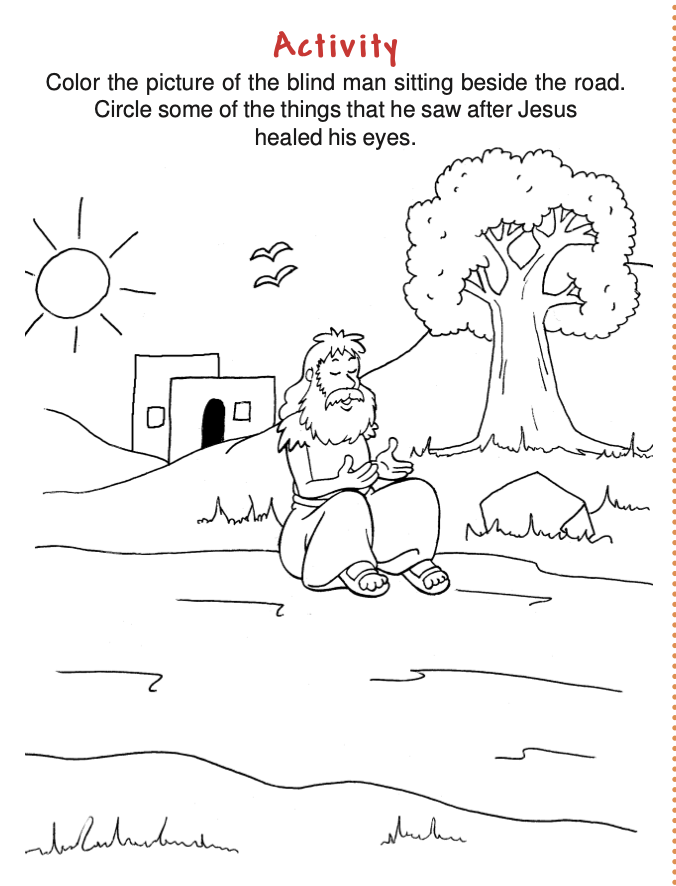

Jeremiah 31:3
Matthew 19:14
Matthew 19:13-15
Mark 10:13-16
John 3:16
Romans 8:38-39
Ephesians 3:19
1 John 3:1; 4:18-19
Revelation 1:5
BLESSING - a gift or favor from God
CEREMONY - an act established by custom or authority
Sunday - Ephesians 3:19
Monday - Jeremiah 31:3
Tuesday - 1 John 3:1
Wednesday - John 3:16
Thursday - Revelation 1:5
Friday - Romans 8:38-39
Saturday - 1 John 4:18-19
1. Self-Portrait. Read the lesson, tell the story from Matthew 19:13-15, or read the account from the Bible. Then give each student sheet of drawing paper that has been cut to 8 x 10. Have them draw a self portrait. Then either write the memory verse or “Jesus Love Me” across the bottom. Remember to date the drawing.
2. Making Music. Read the lesson, tell the story from Matthew 19:13-15, or read the account from the Bible. Give each child a different musical instrument: a triangle, a tambourine, a drum, a bell, a xylophone, etc. Sing the song: Jesus Loves Me. Add the musical instruments with some direction for appropriate playing. After some practice, arrange for the students to sing special music for church.
3. Buttons. Read the lesson, tell the story from Matthew 19:13-15, or read the account from the Bible. You can purchase some inexpensive buttons from Oriental Trading or Amazon. If possible, take a photo of each child and have it ready for completing this project during class. Trim the photo so that the memory verse can be written around the outside of the photo, but within the button. You will either have to do most of this assembly prior to class or have several helpers!
4. Ambassadors for Christ. Read the lesson, tell the story from Matthew 19:13-15, or read the account from the Bible. Discuss why the disciples thought the children should be prohibited from coming to Christ - likely because they felt Jesus was too important to be bothered by children. Discuss why some adults act so grumpy towards children: children are disrespectful, loud, disobedient, darting around suddenly, distracting during church, etc. Use this opportunity to talk about appropriate church behaviors that honor God. Children have a way of reaching people - I’ve seen a little girl at church going from one lap to the next, bringing a smile to each person’s face. Remind the students that their actions can encourage the church family or can cause people to want to avoid church. They can make a person’s day or can make them grumpy. They have an important job. Read Psalm 8:2 to the students.
5. Blessing of the Little Children (FOT). Read the lesson, tell the story from Matthew 19:13-15, or read the account from the Bible. Talk about the church tradition of blessing the little children at the Feast of Tabernacles. Ask the students about their experience participating in this. Emphasize the importance of God’s protection and blessing on each person. Help talk them through the whole experience in case some didn’t understand what happened and why or in case there are some who would likely participate in an upcoming Feast. Also discuss the fact that some parents bless their children each Friday evening to start the sabbath and that if their family doesn’t do that, they might want to consider it as part of making the sabbath holy. Then let the students draw either the blessing of little children ceremony from the feast or a weekly blessing in their own family. Let them choose their favorite art tool: pencil, colored pencils, markers, crayons - or a combination of the four. Title the picture “Blessing the children.”
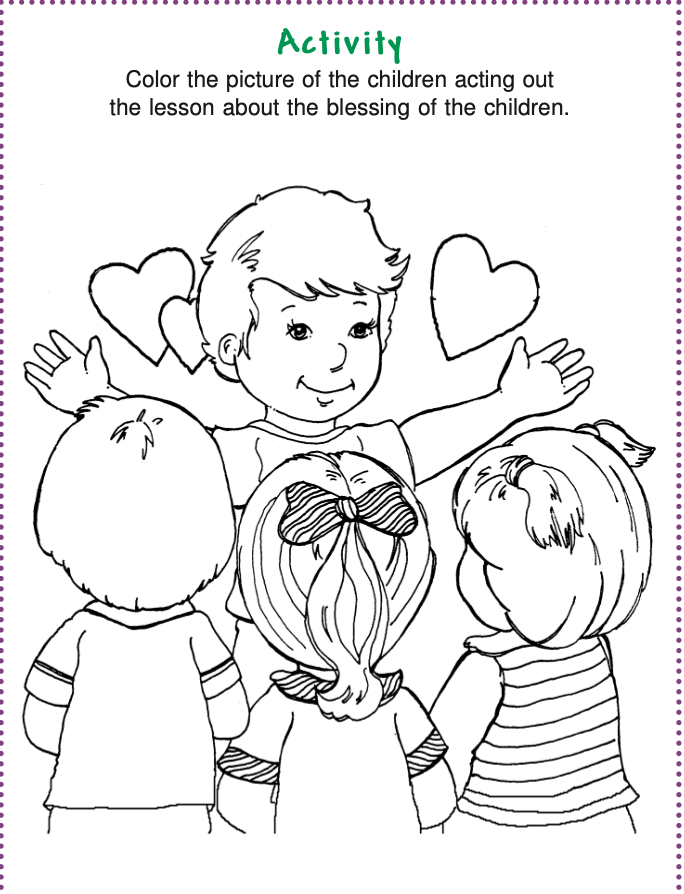

2 Chronicles 22:9
Psalm 14:2; 27:4; 63:1
Matthew 6:33; 7:7
Luke 19:1-10
Luke 19:9
Romans 6:22-23
Colossians 3:1
SIN - to do wrong, break God’s Law
FORGIVE - excuse or pardon, not punish
TAXES - money you are required to pay the government
Sunday - Matthew 7:7
Monday - Matthew 6:33
Tuesday - Colossians 3:1
Wednesday - 2 Chronicles 22:9
Thursday - Psalm 63:1
Friday - Psalm 14:2
Saturday - Psalm 27:4
1. Ten Things. Have the students help you think of ten things that short people can’t do: pick apples high in the tree, reach items on the top shelf, see over people’s head in the movie theatre, stand in the back during a family photo, see over fences, saddle a horse, see their friends on the other side of a crowded room, etc. The students are likely to build on previous answers. So you’ll get answers like “Can’t reach apples in the apple tree” as well as “Can’t pick peaches in the tree” or “Can’t reach the cherries in the cherry tree.” That’s okay. Accept all answers because rejecting any answers tends to stop the brainstorming flow. You’ll want to add the last one to the list: you can’t see Jesus coming down the road because of all the taller people around you. Then talk about solutions: find a tall friend, get a ladder, climb on top of a rock, buy an apple picker, grow, climb on someone’s shoulders, climb a tree, jump, etc. Read Luke 19:1-10 to the students.
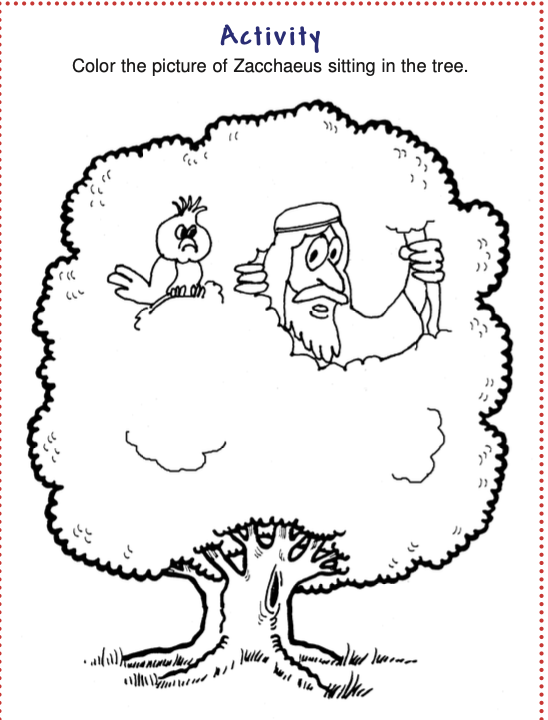
2. Comic Strip. Read the lesson to the students. Then give each student a 4 x 11-inch strip of paper to make a comic strip of Luke 19:1-10. The first frame would be Zacchaeus behind all of the people trying to see Jesus coming. The second frame would be Zacchaeus climbing the tree to see. The third frame would be Jesus telling Zacchaeus to come down, that He is going to his house that day. Write the memory verse along the bottom of the strip. Title the strip “The Man in the Tree.”
3. Sing! Read the lesson to the students. Then sing the song “Zacchaeus Was a Wee Little Man” in the Kids’ Classics Collection songbook. There are action notations to include. (Music will stick with students even when they have forgotten where in the Bible this story is found.) This would be a fun song to do as special music if you have a large enough class and the setting is appropriate for doing so.
4. I Want to See Jesus. Read the lesson to the students. Ask them if they have ever thought about seeing Jesus like Zacchaeus wanted to see Him. Obviously Jesus is not walking the earth as he did 2000 years ago. But He is alive. Read Jeremiah 29:13 to the children. Ask them to help you brainstorm 1) how we can seek Jesus: reading your Bible, praying, going to church, learning your memory verse, reading your lesson with your parents before class, doing the daily devotions, etc. and 2) how we might see Jesus working in our lives: answering prayers, protection from danger, provision of needs, comfort when you’re afraid, guidance in making decisions, help to do the right thing.
Then have the students color a drawing of a tree. Along the bottom of the page you should have printed the memory verse for this lesson. When they are finished, give them some homemade magnets that you’ve made for them prior to class. Construct these magnets using leaf shapes, onto which you write pray, practice your memory verse, read your Bible, etc. You might want to use green cardstock to give the magnets some weight. When you are finished printing one activity on each leaf, cover them with clear contact paper on the front and affix a piece of magnetic tape to the back. The students can take home the tree they colored and the leaf magnets you gave to them. Encourage them to put the pictures on the refrigerator at home as a reminder to daily seek God.
5. Memory Verse Drawing. Read the lesson to the students. Give each student a page where you’ve written the memory verse in bubble letters across the bottom of the page. Have them draw a picture of what the memory verse makes them think of. (Salvation has come to your house. Luke 19:9). Let them color the letters and their picture with their favorite color tools.